
You've Got Whale
About this episode
(repeat) SMS isn’t the original instant messaging system. Plants can send chemical warnings through their leaves in a fraction of a second. And while we love being in the messaging loop – frenetically refreshing our browsers – we miss out on important conversations that no Twitter feed or inbox can capture. That’s because eavesdropping on the communications of non-human species requires the ability to decode their non-written signals.
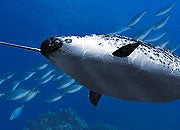
Dive into Arctic waters where scientists make first-ever recordings of the socializing clicks and squeals of narwhals, and find out how climate shifts may pollute their acoustic landscape. Also, why the chemical defense system of plants has prompted one biologist to give greenery an “11 on the scale of awesomeness.” And, you can’t see them, but they sure can sense one another: how communicating microbes plan their attack.
Guests:
Susanna Blackwell – Bio-acoustician with Greeneridge Sciences. Hear her recordings of narwhals here.
Simon Gilroy – Professor of botany, University of Wisconsin, Madison. His video of glowing green caterpillar-munched plants can be viewed here.
Peter Greenberg – Professor of microbiology, University of Washington, Seattle
Learn more about your ad choices. Visit megaphone.fm/adchoices
More from Big Picture Science
Over a hundred years ago two famous men met for a séance. One, the creator of an exceedingly rational pipe-smoking fictional detective, and the other, a showman who amazed audiences with feats of esca…
As their name suggests, “forever chemicals” have extraordinary staying power. When these nearly indestructible compounds find their way into our soil and water, they don’t break down for hundreds or t…
We can now follow where Monarch butterflies go when they leave our gardens with tiny sensors that track their impressive 3,000-mile migrations from Canada to Mexico. The significant challenges that th…
Carbon dioxide is more than an industrial pollutant driving climate change. The gas also played a pivotal part in the dramatic story of the beginning of all life. Starting in the ocean depths, dissolv…
How did scientists learn to peer inside the atom? In this preview from the BBC's In Our Time, physicist Harry Cliff tells the story of the birth of the particle accelerator, from Ernest Rutherford's c…