
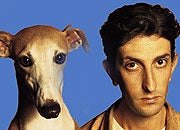
You Say You Want an Evolution?
About this episode
Imagine: Your pint-sized pup is descended from a line of predatory wolves. We have purposefully bred a new species – dogs – to live in harmony with us. But interactions between species, known as co-evolution, happen all the time, even without deliberate intervention. And it’s frequently a boon to survival: Without the symbiotic relationship we have with bugs in our gut, one that’s evolved with time, we wouldn’t exist.
Discover the Bogart-and-Bacall-like relationships between bacteria and humans, and what we learn by seeing genes mutate in the lab, real time. Also, the dog-eat-dog debate about when canines were first domesticated, and how agriculture, hip-hop music, and technology can alter our DNA (eventually).
Plus, why some of the fastest humans in history have hailed from one small area of a small Caribbean island. Is there a gene for that?
Guests:
Greger Larsen – Evolutionary biologist, department of archaeology, Durham University
Peter Richerson – Professor emeritus, University of California, Davis, department of Environmental Science and Policy, author of Not by Genes Alone: How Culture Transformed Human Evolution
Dave van Ditmarsch – Biologist, post-doctoral researcher, Memorial Sloan-Kettering Cancer Center
David Epstein – Senior writer, Sports Illustrated, author of The Sports Gene: Inside the Science of Extraordinary Athletic Performance
Descripción en español
Learn more about your ad choices. Visit megaphone.fm/adchoices
More from Big Picture Science
Over a hundred years ago two famous men met for a séance. One, the creator of an exceedingly rational pipe-smoking fictional detective, and the other, a showman who amazed audiences with feats of esca…
As their name suggests, “forever chemicals” have extraordinary staying power. When these nearly indestructible compounds find their way into our soil and water, they don’t break down for hundreds or t…
We can now follow where Monarch butterflies go when they leave our gardens with tiny sensors that track their impressive 3,000-mile migrations from Canada to Mexico. The significant challenges that th…
Carbon dioxide is more than an industrial pollutant driving climate change. The gas also played a pivotal part in the dramatic story of the beginning of all life. Starting in the ocean depths, dissolv…
How did scientists learn to peer inside the atom? In this preview from the BBC's In Our Time, physicist Harry Cliff tells the story of the birth of the particle accelerator, from Ernest Rutherford's c…