
What Have You Got To Move
About this episode
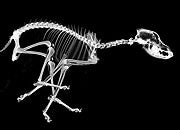
ENCORE Whether they swim, slither, jump, or fly, animal locomotion is more than just an urge to roam: it’s necessary for survival. Evolution has come up with ingenious schemes to get from here to there. Hear how backbones evolved as a consequence of fish needing to wag their fins, and why no animals have wheels.
Motion is more than locomotion. Test the physics of movement in your kitchen and find out what popping corn has in common with the first steam engine.
And while physics insists that atoms are always moving, find how what happens to these basic building blocks when placed in the coldest spot in the universe. The Cold Atom Laboratory chills material to nearly absolute zero, creating some weird superfluid effects as atoms slow down.
Guests:
Matt Wilkinson– Zoologist, science writer, University of Cambridge, author of Restless Creatures: The Story of Life in Ten Movements. Technology.
Helen Czerski–physicist, University College London, author of Storm in a Teacup: The Physics of Everyday Life.
Anita Sengupta– Aerospace Engineer and project manager of the Cold Atom Laboratory at NASA’S Jet Propulsion Lab.
Learn more about your ad choices. Visit megaphone.fm/adchoices
More from Big Picture Science
Over a hundred years ago two famous men met for a séance. One, the creator of an exceedingly rational pipe-smoking fictional detective, and the other, a showman who amazed audiences with feats of esca…
As their name suggests, “forever chemicals” have extraordinary staying power. When these nearly indestructible compounds find their way into our soil and water, they don’t break down for hundreds or t…
We can now follow where Monarch butterflies go when they leave our gardens with tiny sensors that track their impressive 3,000-mile migrations from Canada to Mexico. The significant challenges that th…
Carbon dioxide is more than an industrial pollutant driving climate change. The gas also played a pivotal part in the dramatic story of the beginning of all life. Starting in the ocean depths, dissolv…
How did scientists learn to peer inside the atom? In this preview from the BBC's In Our Time, physicist Harry Cliff tells the story of the birth of the particle accelerator, from Ernest Rutherford's c…