
True Grit (rebroadcast)
About this episode
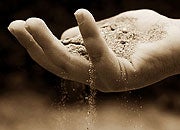
Without sand, engineering would be stuck in the Middle Ages. Wooden houses would line mud-packed streets, and Silicon Valley would be, well, just a valley. Sand is the building material of modern cities, and we use more of this resource than any other except water and air. Now we’re running out of it.
Hear why the Roman recipe for making concrete was lost until the 19th century, and about the super-secret mine in North Carolina that makes your smartphone possible.
Plus, engineered sand turns stormwater into drinking water, and why you might think twice about running barefoot on some tropical beaches once you learn about their biological source.
And, a special report from the coast of Louisiana where livelihoods and ecosystems depend on the successful release of Mississippi sand from levees into sediment-starved wetlands.
Guests:
Vince Beiser – Journalist and author of “The World in a Grain: The Story of Sand and How it Transformed Civilization”
Joe Charbonnet – Science and policy associate at the Green Science Policy Institute in Berkeley, California
Pupa Gilbert – Biophysicist and geobiologist, University of Wisconsin, Madison
Rudy Simoneaux – Engineer manager, Coastal Protection and Restoration Authority, Baton Rouge, Louisiana
Elizabeth Chamberlain – Post-doctoral researcher in Earth and Environmental Sciences, Vanderbilt University
Originally aired January 14, 2019
Learn more about your ad choices. Visit megaphone.fm/adchoices
More from Big Picture Science
Over a hundred years ago two famous men met for a séance. One, the creator of an exceedingly rational pipe-smoking fictional detective, and the other, a showman who amazed audiences with feats of esca…
As their name suggests, “forever chemicals” have extraordinary staying power. When these nearly indestructible compounds find their way into our soil and water, they don’t break down for hundreds or t…
We can now follow where Monarch butterflies go when they leave our gardens with tiny sensors that track their impressive 3,000-mile migrations from Canada to Mexico. The significant challenges that th…
Carbon dioxide is more than an industrial pollutant driving climate change. The gas also played a pivotal part in the dramatic story of the beginning of all life. Starting in the ocean depths, dissolv…
How did scientists learn to peer inside the atom? In this preview from the BBC's In Our Time, physicist Harry Cliff tells the story of the birth of the particle accelerator, from Ernest Rutherford's c…