
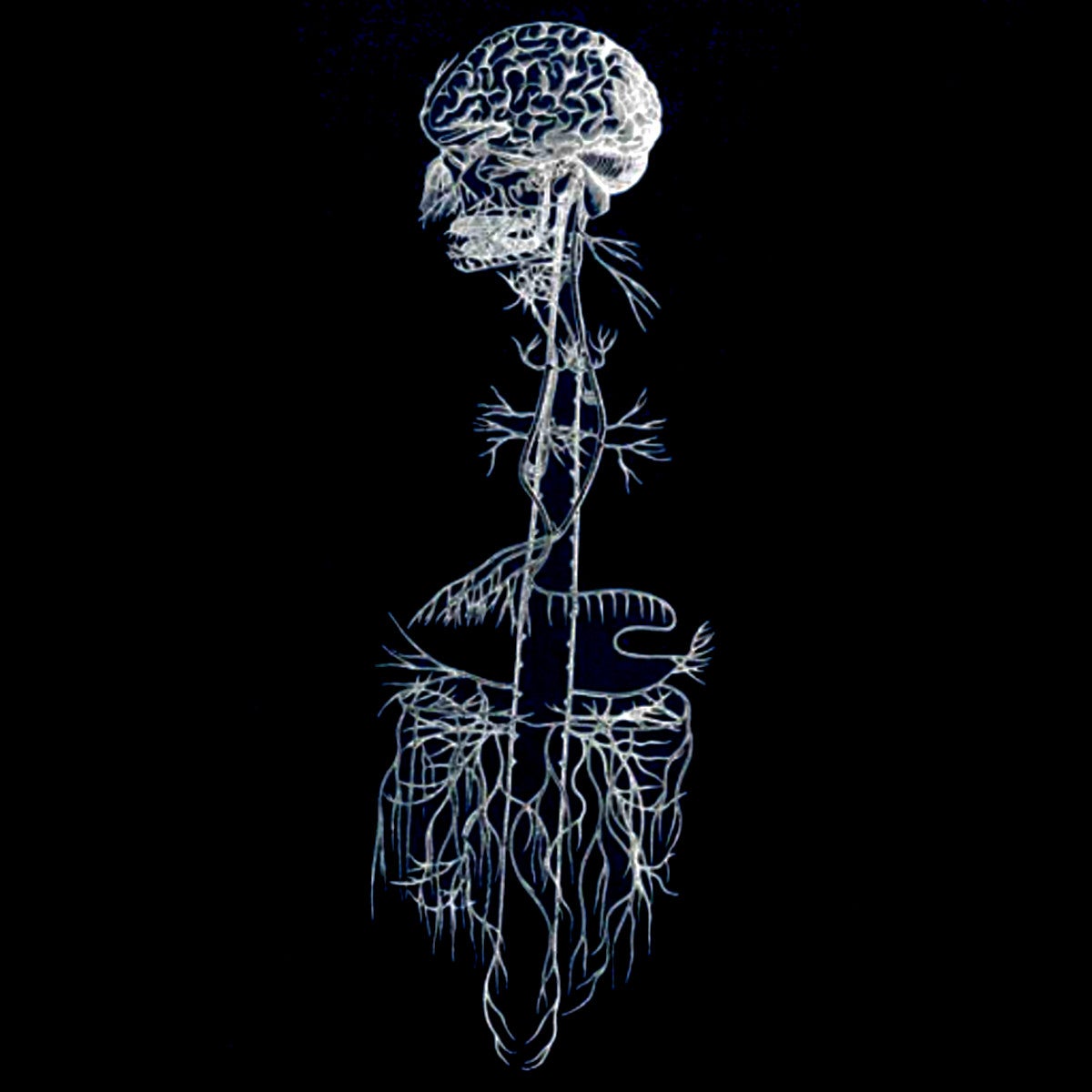
Touching a Nerve
About this episode
Some call it your sixth sense. You refer to it when you have a “gut feeling.” With a vast fiber network running throughout your body, the vagus nerve knows about and helps regulate every critical function in it, from heart rate to digestion to your immune system. Now bioelectric medicine is tapping into that bodily omniscience by using tiny electrical pulses on the vagus nerve to help treat diseases as diverse as epilepsy, diabetes, stroke, Parkinson’s, and even depression. In the coming months, the FDA is set to make a decision about a vagus nerve stimulation device, which, if approved, could provide first-of-its-kind treatment for an autoimmune disease that affects millions of Americans. We consider the groundbreaking potential of vagus nerve stimulation and ask whether electricity could one day replace medications.
Guest:
Kevin Tracey – Neurosurgeon, president of the Feinstein Institutes for Medical Research at Northwell Health, and author of “The Great Nerve: The New Science of the Vagus Nerve and How to Harness Its Healing Reflexes”
Featuring music by Dewey Dellay and Jun Miyake
You can get early access to ad-free versions of every episode by joining us on Patreon. Thanks for your support!
Big Picture Science is part of the Airwave Media podcast network. Please contact [email protected] to inquire about advertising on Big Picture Science.
Learn more about your ad choices. Visit megaphone.fm/adchoices
More from Big Picture Science
Over a hundred years ago two famous men met for a séance. One, the creator of an exceedingly rational pipe-smoking fictional detective, and the other, a showman who amazed audiences with feats of esca…
As their name suggests, “forever chemicals” have extraordinary staying power. When these nearly indestructible compounds find their way into our soil and water, they don’t break down for hundreds or t…
We can now follow where Monarch butterflies go when they leave our gardens with tiny sensors that track their impressive 3,000-mile migrations from Canada to Mexico. The significant challenges that th…
Carbon dioxide is more than an industrial pollutant driving climate change. The gas also played a pivotal part in the dramatic story of the beginning of all life. Starting in the ocean depths, dissolv…
How did scientists learn to peer inside the atom? In this preview from the BBC's In Our Time, physicist Harry Cliff tells the story of the birth of the particle accelerator, from Ernest Rutherford's c…