
The T-Rex Files
About this episode
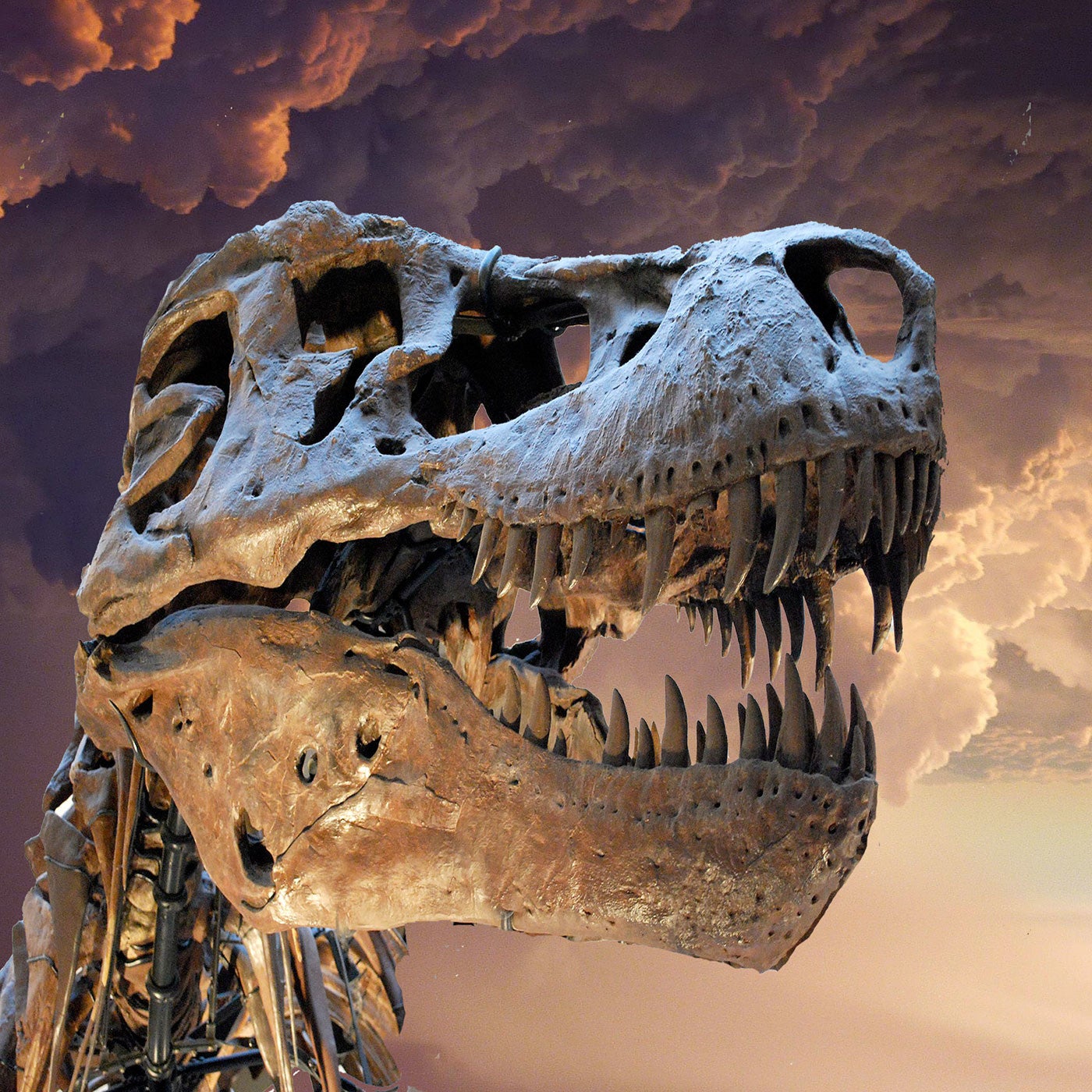
T-Rex is having an identity crisis. Rocking the world of paleontology is the claim that Rex was not one species, but actually three. It’s not the first time that this particular dino has forced us to revise our understanding of the past. The discovery of the first T-Rex fossil in the 19th century taught humanity a scary lesson: species eventually go extinct. If it happened to this seemingly invincible apex predator, it could happen to us too.
Hear how the amateur fossil hunter Barnum Brown’s discovery of T-Rex changed our understanding of ourselves, and the epilogue to the dinosaur era: how our mammalian relatives survived the potential extinction bottleneck of an asteroid impact.
Guests:
Thomas Carr - Vertebrate paleontologist and Professor of Biology, Carthage College
Peter Makovicky - Vertebrate paleontologist and Professor of paleontology in the Department of Earth and Environmental Sciences at the University of Minnesota
David Randall - Author of “The Monster’s Bones: The Discovery of T Rex and How It Shook Our World”
Steve Brusatte - Personal Chair of Paleontology and Evolution, University of Edinburgh. Author of “The Rise and Fall of the Dinosaurs” and, most recently, “The Rise and Reign of The Mammals”
Originally aired October 17, 2022
Featuring music by Dewey Dellay and Jun Miyake
Big Picture Science is part of the Airwave Media podcast network. Please contact [email protected] to inquire about advertising on Big Picture Science.
You can get early access to ad-free versions of every episode by joining us on Patreon. Thanks for your support!
Learn more about your ad choices. Visit megaphone.fm/adchoices
More from Big Picture Science
Over a hundred years ago two famous men met for a séance. One, the creator of an exceedingly rational pipe-smoking fictional detective, and the other, a showman who amazed audiences with feats of esca…
As their name suggests, “forever chemicals” have extraordinary staying power. When these nearly indestructible compounds find their way into our soil and water, they don’t break down for hundreds or t…
We can now follow where Monarch butterflies go when they leave our gardens with tiny sensors that track their impressive 3,000-mile migrations from Canada to Mexico. The significant challenges that th…
Carbon dioxide is more than an industrial pollutant driving climate change. The gas also played a pivotal part in the dramatic story of the beginning of all life. Starting in the ocean depths, dissolv…
How did scientists learn to peer inside the atom? In this preview from the BBC's In Our Time, physicist Harry Cliff tells the story of the birth of the particle accelerator, from Ernest Rutherford's c…