
The Evolution of Evolution
About this episode
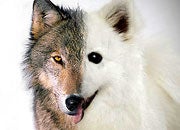
Darwinian evolution is adaptive and slow … millennia can go by before a species changes very much. But with the tools of genetic engineering we can now make radical changes in just one generation. By removing genes or inserting new ones, we can give an organism radically different traits and behaviors. We are taking evolution into our own hands.
It all began with the domestication of plants and animals, which one science writer says created civilization. Today, as humans tinker with their own genome, is it possible we will produce Homo sapiens 2.0?
Also, what happens to those species who can’t control their destiny? How climate change is forcing the biggest genetic reshuffling in recorded history.
Guests:
• Richard Francis – Science writer, author of Domesticated: Evolution in a Man-Made World
• Juan Enriquez – Academic, businessman, author, founding director of the Life Sciences Project, Harvard Business School, managing director, Excel Venture Management, and author of Evolving Ourselves: How Unnatural Selection and Nonrandom Mutation are Changing Life on Earth
• Jessica Hellmann – Biologist, University of Notre Dame
Learn more about your ad choices. Visit megaphone.fm/adchoices
More from Big Picture Science
Over a hundred years ago two famous men met for a séance. One, the creator of an exceedingly rational pipe-smoking fictional detective, and the other, a showman who amazed audiences with feats of esca…
As their name suggests, “forever chemicals” have extraordinary staying power. When these nearly indestructible compounds find their way into our soil and water, they don’t break down for hundreds or t…
We can now follow where Monarch butterflies go when they leave our gardens with tiny sensors that track their impressive 3,000-mile migrations from Canada to Mexico. The significant challenges that th…
Carbon dioxide is more than an industrial pollutant driving climate change. The gas also played a pivotal part in the dramatic story of the beginning of all life. Starting in the ocean depths, dissolv…
How did scientists learn to peer inside the atom? In this preview from the BBC's In Our Time, physicist Harry Cliff tells the story of the birth of the particle accelerator, from Ernest Rutherford's c…