
Stranded
About this episode
Imagine not knowing where you are – and no one else knowing either. Today, that’s pretty unlikely. Digital devices pinpoint our location within a few feet, so it’s hard to get lost anymore. But we can still get stranded.
A reporter onboard an Antarctic ship that was stuck for weeks in sea ice describes his experience, and contrasts that with a stranding a hundred years prior in which explorers ate their dogs to survive.
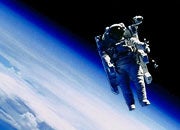
Plus, the Plan B that keeps astronauts from floating away forever … how animals and plants hitch rides on open sea to populate new lands … and the rise of the mapping technology that has made hiding a thing of the past.
Guests:
Hiawatha Bray – Technology reporter, Boston Globe, author of You Are Here: From the Compass to GPS, the History and Future of How We Find Ourselves
Andrew Luck-Baker – Producer, BBC radio science unit, London
Alan de Queiroz – Evolutionary biologist, University of Nevada, Reno and author of The Monkey’s Voyage: How Improbable Journeys Shaped the History of Life
Chris Hadfield – Astronaut and author of An Astronaut’s Guide to Life on Earth: What Going to Space Taught Me About Ingenuity, Determination, and Being Prepared for Anything. His Space Oddity video.
Descripción en español
First released February 3, 2014.
Learn more about your ad choices. Visit megaphone.fm/adchoices
More from Big Picture Science
Over a hundred years ago two famous men met for a séance. One, the creator of an exceedingly rational pipe-smoking fictional detective, and the other, a showman who amazed audiences with feats of esca…
As their name suggests, “forever chemicals” have extraordinary staying power. When these nearly indestructible compounds find their way into our soil and water, they don’t break down for hundreds or t…
We can now follow where Monarch butterflies go when they leave our gardens with tiny sensors that track their impressive 3,000-mile migrations from Canada to Mexico. The significant challenges that th…
Carbon dioxide is more than an industrial pollutant driving climate change. The gas also played a pivotal part in the dramatic story of the beginning of all life. Starting in the ocean depths, dissolv…
How did scientists learn to peer inside the atom? In this preview from the BBC's In Our Time, physicist Harry Cliff tells the story of the birth of the particle accelerator, from Ernest Rutherford's c…