
Spacecraft Elegy
About this episode
Exploration: It’s exciting, it’s novel, and you can’t always count on a round-trip ticket. You can boldly go, but you might not come back. That’s no showstopper for robotic explorers, though. Spacecraft go everywhere.
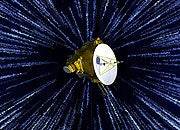
While humans have traveled no farther than the moon, our mechanical proxies are climbing a mountain on Mars, visiting an ice ball far beyond Pluto, plunging through the rings of Saturn, and landing on a comet. Oh, and did we mention they’re also bringing rock and roll to the denizens of deep space, in case they wish to listen.
We consider some of the most daring explorers since the 16th century – made of metal and plastic - venturing to places where no one else could go. What have they done, what are they doing, and at what point do they declare “mission accomplished” and head for that great spacecraft graveyard in the sky?
Guests:
Matt Tiscareno– Planetary Scientist at the SETI Institute
Mark Showalter– Senior Research Scientist, SETI Institute
Jonathan Amos– BBC Senior Writer and Science Correspondent
Ashwin Vasavada– Curiosity Project Scientist at the Jet Propulsion Laboratory
Learn more about your ad choices. Visit megaphone.fm/adchoices
More from Big Picture Science
Over a hundred years ago two famous men met for a séance. One, the creator of an exceedingly rational pipe-smoking fictional detective, and the other, a showman who amazed audiences with feats of esca…
As their name suggests, “forever chemicals” have extraordinary staying power. When these nearly indestructible compounds find their way into our soil and water, they don’t break down for hundreds or t…
We can now follow where Monarch butterflies go when they leave our gardens with tiny sensors that track their impressive 3,000-mile migrations from Canada to Mexico. The significant challenges that th…
Carbon dioxide is more than an industrial pollutant driving climate change. The gas also played a pivotal part in the dramatic story of the beginning of all life. Starting in the ocean depths, dissolv…
How did scientists learn to peer inside the atom? In this preview from the BBC's In Our Time, physicist Harry Cliff tells the story of the birth of the particle accelerator, from Ernest Rutherford's c…