
Space: Why Go There?
About this episode
(repeat) It takes a lot of energy and technology to leave terra firma. But why rocket into space when there’s so much to be done on Earth? From the practical usefulness of satellites to the thrill of exploring other worlds, let us count the ways.
The launch of a NOAA weather satellite to join its twin provides unparalleled observation of storms, wildfires, and even lightning. Find out what it’s like to watch hurricanes form from space.
Meanwhile, more than a dozen countries want their own satellites to help solve real-world problems, including tracking disease. Learn how one woman is helping make space accessible to everyone.
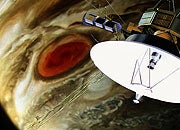
Plus, now that we’ve completed our grand tour of the Solar System, which bodies are targets for return missions and which for human exploration?
Guests:
Sarah Cruddas – Space journalist, broadcaster, and author based in the U.K.
Jamese Sims – GOES-R Project Manager at NOAA
Danielle Wood – Assistant professor, MIT Media Lab, Director of the Space Enabled Research Group
Jim Green – NASA Planetary Science Division Director
Learn more about your ad choices. Visit megaphone.fm/adchoices
More from Big Picture Science
Over a hundred years ago two famous men met for a séance. One, the creator of an exceedingly rational pipe-smoking fictional detective, and the other, a showman who amazed audiences with feats of esca…
As their name suggests, “forever chemicals” have extraordinary staying power. When these nearly indestructible compounds find their way into our soil and water, they don’t break down for hundreds or t…
We can now follow where Monarch butterflies go when they leave our gardens with tiny sensors that track their impressive 3,000-mile migrations from Canada to Mexico. The significant challenges that th…
Carbon dioxide is more than an industrial pollutant driving climate change. The gas also played a pivotal part in the dramatic story of the beginning of all life. Starting in the ocean depths, dissolv…
How did scientists learn to peer inside the atom? In this preview from the BBC's In Our Time, physicist Harry Cliff tells the story of the birth of the particle accelerator, from Ernest Rutherford's c…