
Skeptic Check: Friends Like These
About this episode
We love our family and friends, but sometimes their ideas about how the world works seem a little wacky. We asked BiPiSci listeners to share examples of what they can’t believe their loved-ones believe, no matter how much they hear rational explanations to the contrary. Then we asked some scientists about those beliefs, to get their take.
Discover whether newspaper ink causes cancer … if King Tut really did add a curse to his sarcophagus … the efficacy of examining your irises – iridology – to diagnose disease … and more!
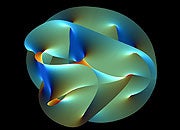
Oh, and what about string theory? Is it falsifiable?
Guests:
• Steven Novella – Physician at Yale University, host of the podcast, “Skeptic’s Guide to the Universe”
• Matthew Hutson – Author of The 7 Laws of Magical Thinking: How Irrational Beliefs Keep Us Happy, Healthy, and Sane
• Brian Greene – Physicist, Columbia University, author of The Hidden Reality: Parallel Universes and the Deep Laws of the Cosmos and The Elegant Universe: Superstrings, Hidden Dimensions, and the Quest for the Ultimate Theory
• Guy Harrison – Author of 50 Popular Beliefs That People Think Are True and, most recently, 50 Simple Questions for Every Christian
Learn more about your ad choices. Visit megaphone.fm/adchoices
More from Big Picture Science
Over a hundred years ago two famous men met for a séance. One, the creator of an exceedingly rational pipe-smoking fictional detective, and the other, a showman who amazed audiences with feats of esca…
As their name suggests, “forever chemicals” have extraordinary staying power. When these nearly indestructible compounds find their way into our soil and water, they don’t break down for hundreds or t…
We can now follow where Monarch butterflies go when they leave our gardens with tiny sensors that track their impressive 3,000-mile migrations from Canada to Mexico. The significant challenges that th…
Carbon dioxide is more than an industrial pollutant driving climate change. The gas also played a pivotal part in the dramatic story of the beginning of all life. Starting in the ocean depths, dissolv…
How did scientists learn to peer inside the atom? In this preview from the BBC's In Our Time, physicist Harry Cliff tells the story of the birth of the particle accelerator, from Ernest Rutherford's c…