
Skeptic Check: Blue Light Special
About this episode
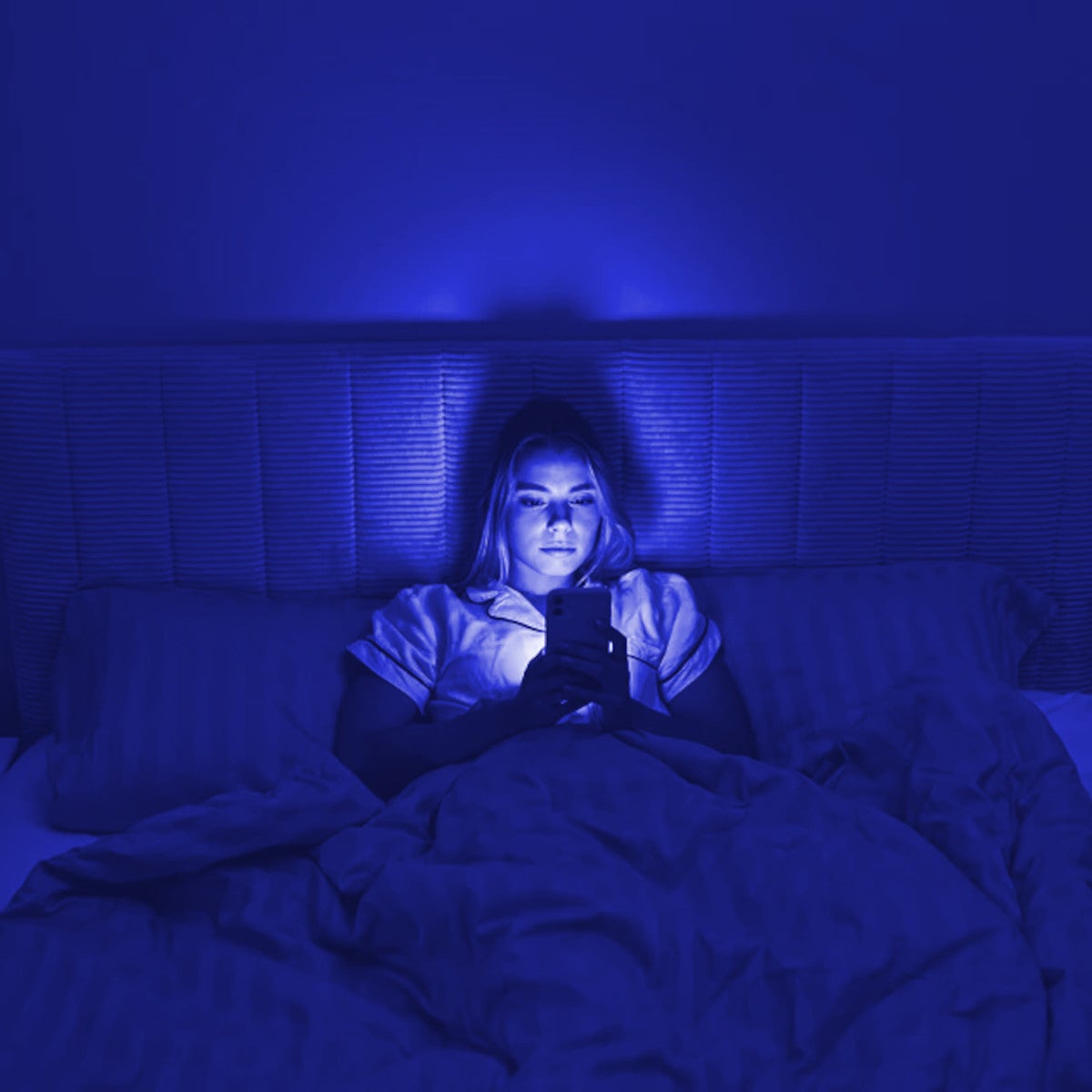
Many of us know the feeling: we intend to go to bed but pull out our phones for one last scroll. Setting them aside hours later, we’re wide awake, unable to fall asleep. For years, scientists have singled out blue light emitted from our devices as the key culprit behind our post-scrolling insomnia, but the scientific consensus is shifting. Although blue light signals to brains that its daytime, surprising new research suggests that our glowing screens may play a smaller role than previously thought.
We present the fascinating science around biological mechanisms of sleep and wakefulness, why circadian rhythms have more in common with your grandfather’s clock than you might think, and why scientists who question the role of blue light in causing nighttime restlessness, still don’t let our phones off the hook completely.
Guests:
Michael Gradisar – clinical psychologist and sleep researcher, former professor at Flinders University in Australia. Currently serves a head of Sleep Science at Sleep Cycle, a sleep tracking app company
Jay Dunlap – geneticist and molecular geneticist at the Geisel School of Medicine at Dartmouth who works the molecular basis of circadian rhythms
Mariana Figueiro – photobiologist, Director of the Light and Health Research Center and Professor of Population Health Science and Policy at the Icahn School of Medicine at Mount Sinai
Big Picture Science is part of the Airwave Media podcast network. Please contact [email protected] to inquire about advertising on Big Picture Science.
You can get early access to ad-free versions of every episode by joining us on Patreon. Thanks for your support!
Learn more about your ad choices. Visit megaphone.fm/adchoices
More from Big Picture Science
Over a hundred years ago two famous men met for a séance. One, the creator of an exceedingly rational pipe-smoking fictional detective, and the other, a showman who amazed audiences with feats of esca…
As their name suggests, “forever chemicals” have extraordinary staying power. When these nearly indestructible compounds find their way into our soil and water, they don’t break down for hundreds or t…
We can now follow where Monarch butterflies go when they leave our gardens with tiny sensors that track their impressive 3,000-mile migrations from Canada to Mexico. The significant challenges that th…
Carbon dioxide is more than an industrial pollutant driving climate change. The gas also played a pivotal part in the dramatic story of the beginning of all life. Starting in the ocean depths, dissolv…
How did scientists learn to peer inside the atom? In this preview from the BBC's In Our Time, physicist Harry Cliff tells the story of the birth of the particle accelerator, from Ernest Rutherford's c…