
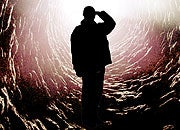
Skeptic Check: After the Hereafter
About this episode
There are few enduring truths, but one is that no one gets out of life alive. What’s less certain is what comes next. Does everything stop with death, or are we transported to another plane of existence? First-hand accounts of people who claim to have visited heaven are offered as proof of an afterlife. Now the author of one bestseller admits that his story was fabricated.
We’ll look at the genre of “heaven tourism” to see if it has anything to say about the possible existence of the hereafter, and why the idea of an afterlife seriously influences how we live our lives on Earth.
Also, a neurologist describes what is going on in the brain during near-death and other out-of-body experiences.
It’s Skeptic Check, our monthly look at critical thinking … but don’t take our word for it!
Guests:
• Ben Radford – Paranormal investigator, research fellow at the Committee for Skeptical Inquiry and deputy editor of the Skeptical Inquirer, and author of the Discovery News article, “Why People Believed Boy’s ‘Visit to Heaven’ Story”
• Greg Garrett – Professor of English at Baylor University, writer on books, culture and religion for the Huffington Post, and author of Entertaining Judgment: The Afterlife in Popular Imagination
• Steven Novella – Professor of neurology at Yale University School of Medicine and host of the “Skeptic’s Guide to the Universe” podcast
Originally Aired May 24, 2015
Learn more about your ad choices. Visit megaphone.fm/adchoices
More from Big Picture Science
Over a hundred years ago two famous men met for a séance. One, the creator of an exceedingly rational pipe-smoking fictional detective, and the other, a showman who amazed audiences with feats of esca…
As their name suggests, “forever chemicals” have extraordinary staying power. When these nearly indestructible compounds find their way into our soil and water, they don’t break down for hundreds or t…
We can now follow where Monarch butterflies go when they leave our gardens with tiny sensors that track their impressive 3,000-mile migrations from Canada to Mexico. The significant challenges that th…
Carbon dioxide is more than an industrial pollutant driving climate change. The gas also played a pivotal part in the dramatic story of the beginning of all life. Starting in the ocean depths, dissolv…
How did scientists learn to peer inside the atom? In this preview from the BBC's In Our Time, physicist Harry Cliff tells the story of the birth of the particle accelerator, from Ernest Rutherford's c…