
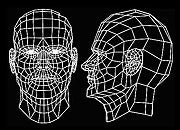
Skeptic Check: About Face
About this episode
Face it – humans are pattern-seeking animals. We identify eyes, nose and mouth where there are none. Martian rock takes on a visage and the silhouette of Elvis appears in our burrito. Discover the roots of our face-tracking tendency – pareidolia – and why it sometimes leads us astray.
Plus, why some brains can’t recognize faces at all … how computer programs exhibit their own pareidolia … and why it’s so difficult to replicate human vision in a machine
Guests:
Phil Plait – Astronomer, Skeptic, and author of Slate Magazine’s blog Bad Astronomy
Josef Parvizi – Associate professor, Stanford University, and clinical neurologist and epilepsy specialist at Stanford Medical Center
Nancy Kanwisher – Cognitive neuroscientist, at the McGovern Institute for Brain Research at MIT
Greg Borenstein – Artist, creative technologist who teaches at New York University
Pietro Perona – Professor of electrical engineering, computation and neural systems, California Institute of Technology
Descripción en español
First released February 25, 2013.
Learn more about your ad choices. Visit megaphone.fm/adchoices
More from Big Picture Science
Over a hundred years ago two famous men met for a séance. One, the creator of an exceedingly rational pipe-smoking fictional detective, and the other, a showman who amazed audiences with feats of esca…
As their name suggests, “forever chemicals” have extraordinary staying power. When these nearly indestructible compounds find their way into our soil and water, they don’t break down for hundreds or t…
We can now follow where Monarch butterflies go when they leave our gardens with tiny sensors that track their impressive 3,000-mile migrations from Canada to Mexico. The significant challenges that th…
Carbon dioxide is more than an industrial pollutant driving climate change. The gas also played a pivotal part in the dramatic story of the beginning of all life. Starting in the ocean depths, dissolv…
How did scientists learn to peer inside the atom? In this preview from the BBC's In Our Time, physicist Harry Cliff tells the story of the birth of the particle accelerator, from Ernest Rutherford's c…