
Shell on Earth
About this episode
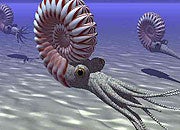
(repeat) We all may retreat to our protective shells, but evolution has perfected the calcite variety to give some critters permanent defense against predators. So why did squids and octopuses lose their shells? Find out what these cephalopods gained by giving up the shell game.
Plus why Chesapeake Bay oyster shells are shells of their former selves. What explains the absence of the dinner-plate sized oysters of 500,000 years ago, and how conservation paleobiology is probing deep time for strategies to bring back these monster mollusks.
Also, was the Earth once encased in a giant, continental shell? A new theory of plate tectonics. Land ho!
Guests:
Rowan Lockwood – Conservation paleobiologist at the College of William and Mary.
Al Tanner – Ph.D. student in paleobiology at the University of Bristol, U.K.
Mike Brown – Professor of Geology, University of Maryland
Learn more about your ad choices. Visit megaphone.fm/adchoices
More from Big Picture Science
Over a hundred years ago two famous men met for a séance. One, the creator of an exceedingly rational pipe-smoking fictional detective, and the other, a showman who amazed audiences with feats of esca…
As their name suggests, “forever chemicals” have extraordinary staying power. When these nearly indestructible compounds find their way into our soil and water, they don’t break down for hundreds or t…
We can now follow where Monarch butterflies go when they leave our gardens with tiny sensors that track their impressive 3,000-mile migrations from Canada to Mexico. The significant challenges that th…
Carbon dioxide is more than an industrial pollutant driving climate change. The gas also played a pivotal part in the dramatic story of the beginning of all life. Starting in the ocean depths, dissolv…
How did scientists learn to peer inside the atom? In this preview from the BBC's In Our Time, physicist Harry Cliff tells the story of the birth of the particle accelerator, from Ernest Rutherford's c…