
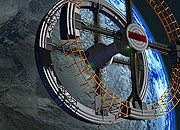
Science Fiction True
About this episode
Don’t believe everything you see on TV or the movies. Science fiction is just a guide to how our future might unfold. It can be misleading, as anyone who yearns for a flying car can tell you. And yet, sometimes fantasy becomes fact. Think of the prototype cellphones in Star Trek.
We take a look at science that seems inspired by filmic sci-fi, for example scientists manipulating memory as in Sunshine of the Spotless Mind. And despite his famous film meltdown, Charleton Heston hasn’t stopped the Soylent company from producing what it calls the food of the future.
Plus, why eco-disaster films have the science wrong, but not in the way you might think. And, what if our brains are simply wired to accept film as fact?
Guests:
Steve Ramirez -Neuroscientist, Massachusetts Institute of Technology
Rob Rhinehart – CEO and founder of Soylent
Jason Mark – Editor of Earth Island Journal
Jeffrey Zacks – Cognitive Neuroscientist, Washington University, St. Louis, and author of Flicker: Your Brain on Movies
First released December 22, 2014.
Learn more about your ad choices. Visit megaphone.fm/adchoices
More from Big Picture Science
Over a hundred years ago two famous men met for a séance. One, the creator of an exceedingly rational pipe-smoking fictional detective, and the other, a showman who amazed audiences with feats of esca…
As their name suggests, “forever chemicals” have extraordinary staying power. When these nearly indestructible compounds find their way into our soil and water, they don’t break down for hundreds or t…
We can now follow where Monarch butterflies go when they leave our gardens with tiny sensors that track their impressive 3,000-mile migrations from Canada to Mexico. The significant challenges that th…
Carbon dioxide is more than an industrial pollutant driving climate change. The gas also played a pivotal part in the dramatic story of the beginning of all life. Starting in the ocean depths, dissolv…
How did scientists learn to peer inside the atom? In this preview from the BBC's In Our Time, physicist Harry Cliff tells the story of the birth of the particle accelerator, from Ernest Rutherford's c…