
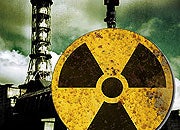
Rethinking Chernobyl
About this episode
The catastrophic explosion at the Chernobyl nuclear power plant in April 1986 triggered the full-scale destruction of the reactor. But now researchers with access to once-classified Soviet documents are challenging the official version of what happened both before and after the explosion. They say that the accident was worse than we thought and that a number of factors – from paranoia to poor engineering – made the mishap inevitable. Others claim a much larger death toll from extended exposure to low levels of radiation. But with nuclear energy being a possibly essential component of dealing with rising carbon dioxide emissions, how do we evaluate risk under the long shadow of Chernobyl?
Guests:
Adam Higginbotham – Author of “Midnight in Chernobyl: The Untold Story of the World’s Greatest Nuclear Disaster”
Kate Brown – Historian of Environmental and Nuclear History at the Massachusetts Institute of Technology and author of “Manual for Survival: A Chernobyl Guide for the Future”
James Smith – Professor in the School of Earth & Environmental Sciences, University of Portsmouth, U.K. He was interviewed for and has written a review of "Manual for Survival"
Ted Nordhaus – Founder and Executive Director of The Breakthrough Institute, Berkeley, California
Learn more about your ad choices. Visit megaphone.fm/adchoices
More from Big Picture Science
Over a hundred years ago two famous men met for a séance. One, the creator of an exceedingly rational pipe-smoking fictional detective, and the other, a showman who amazed audiences with feats of esca…
As their name suggests, “forever chemicals” have extraordinary staying power. When these nearly indestructible compounds find their way into our soil and water, they don’t break down for hundreds or t…
We can now follow where Monarch butterflies go when they leave our gardens with tiny sensors that track their impressive 3,000-mile migrations from Canada to Mexico. The significant challenges that th…
Carbon dioxide is more than an industrial pollutant driving climate change. The gas also played a pivotal part in the dramatic story of the beginning of all life. Starting in the ocean depths, dissolv…
How did scientists learn to peer inside the atom? In this preview from the BBC's In Our Time, physicist Harry Cliff tells the story of the birth of the particle accelerator, from Ernest Rutherford's c…