
Race and COVID
About this episode
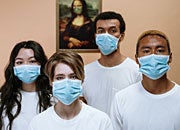
While citizens take to the streets to protest racist violence, the pandemic has its own brutal inequities. Black, Latino, and Native American people are bearing the brunt of COVID illness and death. We look at the multitude of factors that contribute to this disparity, most of which existed long before the pandemic. Also, how the Cheyenne River Sioux tribe maintained their coronavirus safeguards in defiance of the South Dakota governor. And, the biological reasons why we categorize one another by skin color.
Guests:
Marcella Nunez Smith – Associate Professor of Medicine and of Epidemiology, Yale School of Medicine, Director, Equity Research and Innovation Center
Utibe Essien – Assistant Professor of Medicine, University of Pittsburgh School of Medicine, and a Core Investigator, Center for Health Equity Research and Promotion, VA Pittsburgh Healthcare System
Nina Jablonski – Anthropologist, paleobiologist at Pennsylvania State University and author of, “Skin: A Natural History,” and “Living Color: the Biological and Social Meaning of Skin Color.”
Robert Sapolsky – Professor of neuroscience at Stanford University, and author of “Behave: The Biology of Humans at Our Best and Worst.”
Harold Frazier – Chairman of the Cheyenne River Sioux tribe, South Dakota. The Cheyenne River Sioux Reservation COVID checkpoint on Highway 212 is featured in an article on Indianz.com.
Learn more about your ad choices. Visit megaphone.fm/adchoices
More from Big Picture Science
Over a hundred years ago two famous men met for a séance. One, the creator of an exceedingly rational pipe-smoking fictional detective, and the other, a showman who amazed audiences with feats of esca…
As their name suggests, “forever chemicals” have extraordinary staying power. When these nearly indestructible compounds find their way into our soil and water, they don’t break down for hundreds or t…
We can now follow where Monarch butterflies go when they leave our gardens with tiny sensors that track their impressive 3,000-mile migrations from Canada to Mexico. The significant challenges that th…
Carbon dioxide is more than an industrial pollutant driving climate change. The gas also played a pivotal part in the dramatic story of the beginning of all life. Starting in the ocean depths, dissolv…
How did scientists learn to peer inside the atom? In this preview from the BBC's In Our Time, physicist Harry Cliff tells the story of the birth of the particle accelerator, from Ernest Rutherford's c…