
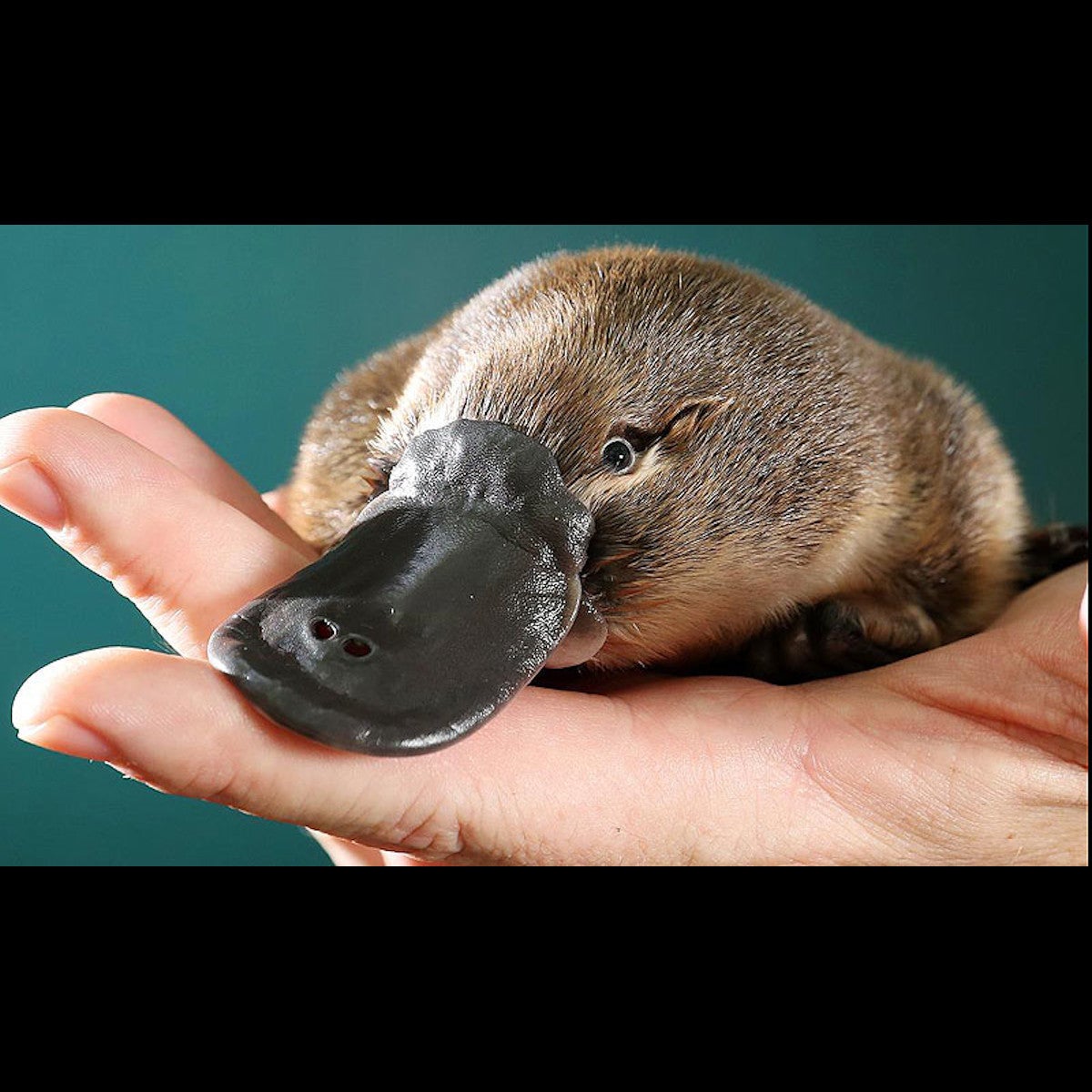
Platypus Crazy*
About this episode
They look like a cross between a beaver and a duck, and they all live Down Under. The platypus may lay eggs, but is actually a distant mammalian cousin, one that we last saw, in an evolutionary sense, about 166 million years ago.
Genetic sequencing is being used to trace that history, while scientists intensify their investigation of the habits and habitats of these appealing Frankencreatures; beginning by taking a census to see just how many are out there, and if their survival is under threat.
Guests:
Josh Griffiths – Senior Wildlife Ecologist at Cesaar Australia.
Jane Fenelon – Research fellow, University of Melbourne
Paula Anich – Professor of Natural Resources, Northland College
Wes Warren – Professor of Genomics, University of Missouri
Phoebe Meagher – Conservation Officer, Taronga Conservation Society, Australia
Originally aired August 2, 2021
Featuring music by Dewey Dellay and Jun Miyake
Big Picture Science is part of the Airwave Media podcast network. Please contact [email protected] to inquire about advertising on Big Picture Science.
You can get early access to ad-free versions of every episode by joining us on Patreon. Thanks for your support!
Learn more about your ad choices. Visit megaphone.fm/adchoices
More from Big Picture Science
Over a hundred years ago two famous men met for a séance. One, the creator of an exceedingly rational pipe-smoking fictional detective, and the other, a showman who amazed audiences with feats of esca…
As their name suggests, “forever chemicals” have extraordinary staying power. When these nearly indestructible compounds find their way into our soil and water, they don’t break down for hundreds or t…
We can now follow where Monarch butterflies go when they leave our gardens with tiny sensors that track their impressive 3,000-mile migrations from Canada to Mexico. The significant challenges that th…
Carbon dioxide is more than an industrial pollutant driving climate change. The gas also played a pivotal part in the dramatic story of the beginning of all life. Starting in the ocean depths, dissolv…
How did scientists learn to peer inside the atom? In this preview from the BBC's In Our Time, physicist Harry Cliff tells the story of the birth of the particle accelerator, from Ernest Rutherford's c…