
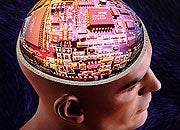
Meet Your Replacements
About this episode
There’s no one like you. At least, not yet. But in some visions of the future, androids can do just about everything, computers will hook directly into your brain, and genetic human-hybrids with exotic traits will be walking the streets. So could humans become an endangered species?
Be prepared to meet the new-and-improved you. But how much human would actually remain in the humanoids of the future?
Plus, tips for preventing our own extinction in the face of inevitable natural catastrophes.
Guests:
• Robin Hanson – Associate professor of economics, George Mason University
• Luke Muehlhauser – Executive director of the Machine Intelligence Research Institute
• Stuart Newman – Professor of cell biology and anatomy, New York Medical College
• Annalee Newitz – Editor of io9.com, and author of Scatter, Adapt, and Remember: How Humans Will Survive a Mass Extinction
First released July 1, 2013.
Learn more about your ad choices. Visit megaphone.fm/adchoices
More from Big Picture Science
Over a hundred years ago two famous men met for a séance. One, the creator of an exceedingly rational pipe-smoking fictional detective, and the other, a showman who amazed audiences with feats of esca…
As their name suggests, “forever chemicals” have extraordinary staying power. When these nearly indestructible compounds find their way into our soil and water, they don’t break down for hundreds or t…
We can now follow where Monarch butterflies go when they leave our gardens with tiny sensors that track their impressive 3,000-mile migrations from Canada to Mexico. The significant challenges that th…
Carbon dioxide is more than an industrial pollutant driving climate change. The gas also played a pivotal part in the dramatic story of the beginning of all life. Starting in the ocean depths, dissolv…
How did scientists learn to peer inside the atom? In this preview from the BBC's In Our Time, physicist Harry Cliff tells the story of the birth of the particle accelerator, from Ernest Rutherford's c…