
Geology is Destiny
About this episode
ENCORE The record of the rocks is not just the history of Earth; it’s your history too. Geologists can learn about events going back billions of years that influenced – and even made possible – our present-day existence and shaped our society.
If the last Ice Age had been a bit warmer, the rivers and lakes of the Midwest would have been much farther north and the U.S. might still be a small country of 13 states. If some Mediterranean islands hadn’t twisted a bit, no roads would have led to Rome.
Geology is big history, and the story is on-going. Human activity is changing the planet too, and has introduced its own geologic era, the Anthropocene. Will Earthlings of a hundred million years from now dig up our plastic refuse and study it the way we study dinosaur bones?
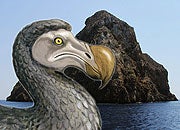
Plus, the dodo had the bad luck to inhabit a small island and couldn’t adapt to human predators. But guess what? It wasn’t as dumb as you think.
Guests:
Walter Alvarez – Professor of Geology, University of California, Berkeley, and author of A Most Improbable Journey: A Big History of Our Planet and Ourselves
David Grinspoon – Senior scientist at the Planetary Science Institute, and author of Earth in Human Hands: Shaping Our Planet’s Future
Eugenia Gold – Instructor, Department of Anatomical Sciences, Stony Brook University
Learn more about your ad choices. Visit megaphone.fm/adchoices
More from Big Picture Science
Over a hundred years ago two famous men met for a séance. One, the creator of an exceedingly rational pipe-smoking fictional detective, and the other, a showman who amazed audiences with feats of esca…
As their name suggests, “forever chemicals” have extraordinary staying power. When these nearly indestructible compounds find their way into our soil and water, they don’t break down for hundreds or t…
We can now follow where Monarch butterflies go when they leave our gardens with tiny sensors that track their impressive 3,000-mile migrations from Canada to Mexico. The significant challenges that th…
Carbon dioxide is more than an industrial pollutant driving climate change. The gas also played a pivotal part in the dramatic story of the beginning of all life. Starting in the ocean depths, dissolv…
How did scientists learn to peer inside the atom? In this preview from the BBC's In Our Time, physicist Harry Cliff tells the story of the birth of the particle accelerator, from Ernest Rutherford's c…