
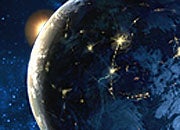
Earth: A Millennium Hence
About this episode
Humans have not gone unnoticed on this planet. We’ve left our mark with technology, agriculture, architecture, and a growing carbon footprint. But where is this trajectory headed?
In the second of a two-part series: what we’ll lose and what will last in 1000 years or more.
Discover what the planet might look like to geologists of the far-off-future… the stubborn longevity of plastic and radioactive waste... human civilization in space… and postcards from the galactic edge; crafting interstellar messages to E.T.
Guests:
Charles Moore - Sea Captain and founder of Algalita Marine Research Foundation
Jan Zalasiewicz - Geologist, University of Leicester and author of The Earth After Us: What Legacy Will Humans Leave in the Rocks?
Matthew Wald - Reporter for the New York Times and author of the article “Is There a Place for Nuclear Waste?” in the August 2009 issue of Scientific American
Doug Vakoch - Director of Interstellar Message Composition at the SETI Institute
David Korsmeyer - Chief of the Intelligent Systems Division at NASA Ames Research Center
Descripción en español
Learn more about your ad choices. Visit megaphone.fm/adchoices
More from Big Picture Science
Over a hundred years ago two famous men met for a séance. One, the creator of an exceedingly rational pipe-smoking fictional detective, and the other, a showman who amazed audiences with feats of esca…
As their name suggests, “forever chemicals” have extraordinary staying power. When these nearly indestructible compounds find their way into our soil and water, they don’t break down for hundreds or t…
We can now follow where Monarch butterflies go when they leave our gardens with tiny sensors that track their impressive 3,000-mile migrations from Canada to Mexico. The significant challenges that th…
Carbon dioxide is more than an industrial pollutant driving climate change. The gas also played a pivotal part in the dramatic story of the beginning of all life. Starting in the ocean depths, dissolv…
How did scientists learn to peer inside the atom? In this preview from the BBC's In Our Time, physicist Harry Cliff tells the story of the birth of the particle accelerator, from Ernest Rutherford's c…