
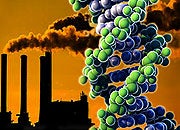
DNA is Not Destiny
About this episode
(repeat) Heredity was once thought to be straightforward. Genes were passed in an immutable path from parents to you, and you were stuck – or blessed – with what you got. DNA didn’t change.
But now we know that’s not true. Epigenetic factors, such as your environment and your lifestyle, control how your genes are expressed. Meanwhile, the powerful tool CRISPR allows us to tinker with the genes themselves. DNA is no longer destiny.
Hear the results from the NASA twin study and what happened to astronaut Scott Kelly’s DNA after a year on the International Space Station. Plus, whether there’s evidence that epigenetic changes can be passed down. And, if we can wipe out deadly malaria by engineering the mosquito genome for sterility, should we do it?
Guests:
Scott Kelly – Former military test pilot and astronaut and author of “Infinite Wonder”
Carl Zimmer – Columnist for The New York Times, author of “She Has Her Mother’s Laugh: The Powers, Perversions, and Potential of Heredity"
Christopher Mason – Associate professor of genetics and computational biology at Weill Cornell Medicine
Michael Snyder – Chair of the genetics department and director of the Center for Genomics and Precision Medicine at Stanford University
Nicole Gladish – PhD candidate, department of medical genetics, University of British Columbia
Learn more about your ad choices. Visit megaphone.fm/adchoices
More from Big Picture Science
Over a hundred years ago two famous men met for a séance. One, the creator of an exceedingly rational pipe-smoking fictional detective, and the other, a showman who amazed audiences with feats of esca…
As their name suggests, “forever chemicals” have extraordinary staying power. When these nearly indestructible compounds find their way into our soil and water, they don’t break down for hundreds or t…
We can now follow where Monarch butterflies go when they leave our gardens with tiny sensors that track their impressive 3,000-mile migrations from Canada to Mexico. The significant challenges that th…
Carbon dioxide is more than an industrial pollutant driving climate change. The gas also played a pivotal part in the dramatic story of the beginning of all life. Starting in the ocean depths, dissolv…
How did scientists learn to peer inside the atom? In this preview from the BBC's In Our Time, physicist Harry Cliff tells the story of the birth of the particle accelerator, from Ernest Rutherford's c…