
Celestial Shake-Up
About this episode
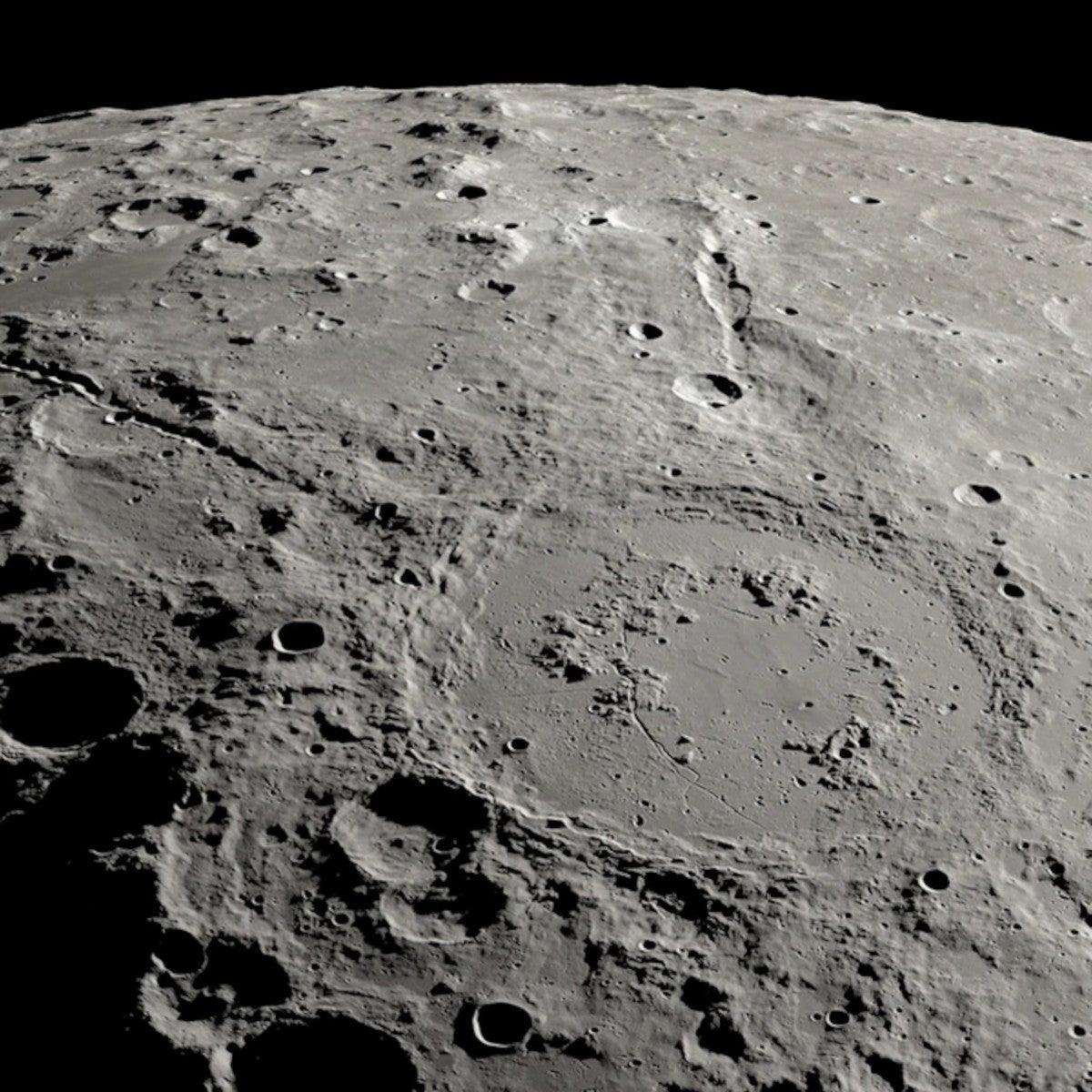
We’re going back to the Moon. The planned March 2026 launch of Artemis II is the first crewed mission to the moon since 1972. Historic as it is, it isn’t the only lunar event creating a stir at NASA. Two seismometers are to be delivered to Schrödinger’s Crater in a mission called The Farside Seismic Suite, in which the instruments will measure moonquakes and record the possible impact of asteroid 2024 YR4 on lunar surface. Meanwhile, studies of the sun are heating up. The so-called PUNCH mission, a four-satellite constellation that will create an image of the sun’s corona and solar winds, may help us better understand what drives solar storms and how we can protect Earth from their energetic blasts.
Guests:
Eugene Cernan – Apollo 17 astronaut
Harrison "Jack" Schmitt – Geologist and Apollo 17 astronaut
Andrew Rivkin – Planetary astronomer at the Applied Physics Laboratory at Johns Hopkins University
Ceri Nunn – Lunar seismologist and planetary scientist, NASA’s Jet Propulsion Laboratory
Ryan French – solar physicist, at the Laboratory for Atmospheric & Space Physics, Boulder, Colorado, and author of “Space Hazards: Asteroids, Solar Flares and Cosmic Threats”
Craig DeForest – Heliophysicist, Southwest Research Institute, principal investigator on NASA’s PUNCH mission
Featuring music by Dewey Dellay and Jun Miyake
Big Picture Science is part of the Airwave Media podcast network. Please contact [email protected] to inquire about advertising on Big Picture Science.
You can get early access to ad-free versions of every episode by joining us on Patreon. Thanks for your support!
Learn more about your ad choices. Visit megaphone.fm/adchoices
More from Big Picture Science
Over a hundred years ago two famous men met for a séance. One, the creator of an exceedingly rational pipe-smoking fictional detective, and the other, a showman who amazed audiences with feats of esca…
As their name suggests, “forever chemicals” have extraordinary staying power. When these nearly indestructible compounds find their way into our soil and water, they don’t break down for hundreds or t…
We can now follow where Monarch butterflies go when they leave our gardens with tiny sensors that track their impressive 3,000-mile migrations from Canada to Mexico. The significant challenges that th…
Carbon dioxide is more than an industrial pollutant driving climate change. The gas also played a pivotal part in the dramatic story of the beginning of all life. Starting in the ocean depths, dissolv…
How did scientists learn to peer inside the atom? In this preview from the BBC's In Our Time, physicist Harry Cliff tells the story of the birth of the particle accelerator, from Ernest Rutherford's c…