
Catching Fire
About this episode
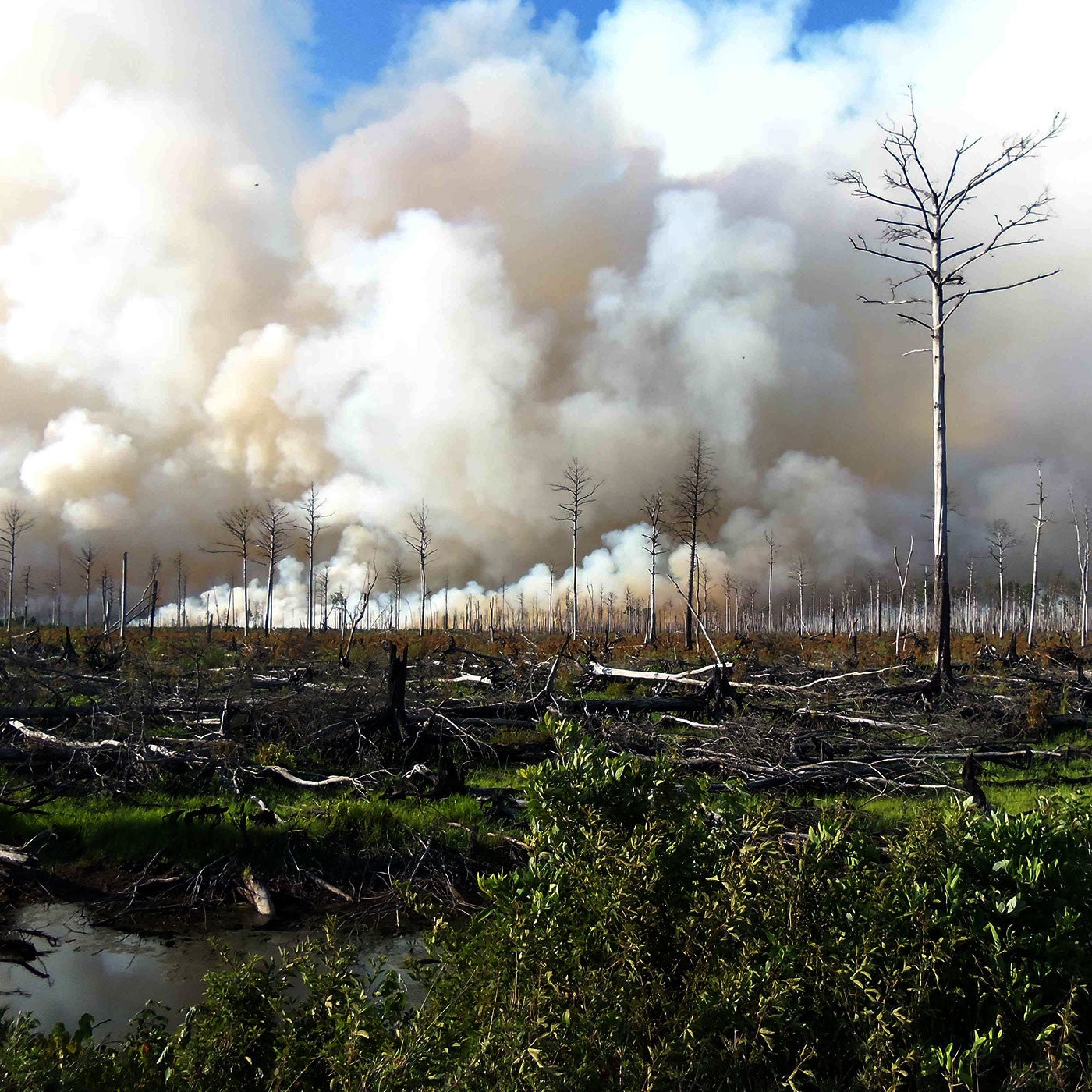
We have too much “bad fire.” Not only destructive wildfires, but the combustion that powers our automobiles and provides our electricity has generated a worrying rise in atmospheric carbon dioxide. And that is driving climate change which is adding to the frequency of megafires. Now we’re seeing those effects in “fire-clouds,” pyrocumulonimbus events.
But there’s such a thing as “good fire.” Indigenous peoples managed the land with controlled fires, reaped the benefits of doing so, and they’re bringing them back.
So after millions of years of controlling fire, is it time for us to revisit our attitudes and policies, not just with regard to combustion, but how we manage our wildfires?
Guests:
David Peterson - Meteorologist, U.S. Naval Research Laboratory
Stephen Pyne - Emeritus professor at Arizona State University, fire historian, urban farmer, author of “The Pyrocene: How We Created an Age of Fire, and What Happens Next”
Richard Wrangham - Ruth B. Moore Research Professor of Biological Anthropology at Harvard University and author of "Catching Fire: How Coooking Made Us Human"
Margo Robbins - Co-founder and president of the Cultural Fire Management Council (CFMC), organizer of the Cultural Burn Training Exchange (TREX) that takes place on the Yurok Reservation twice a year, and an enrolled member of the Yurok Tribe
Originally aired May 9, 2022
Featuring music by Dewey Dellay and Jun Miyake
Big Picture Science is part of the Airwave Media podcast network. Please contact [email protected] to inquire about advertising on Big Picture Science.
You can get early access to ad-free versions of every episode by joining us on Patreon. Thanks for your support!
Learn more about your ad choices. Visit megaphone.fm/adchoices
More from Big Picture Science
Over a hundred years ago two famous men met for a séance. One, the creator of an exceedingly rational pipe-smoking fictional detective, and the other, a showman who amazed audiences with feats of esca…
As their name suggests, “forever chemicals” have extraordinary staying power. When these nearly indestructible compounds find their way into our soil and water, they don’t break down for hundreds or t…
We can now follow where Monarch butterflies go when they leave our gardens with tiny sensors that track their impressive 3,000-mile migrations from Canada to Mexico. The significant challenges that th…
Carbon dioxide is more than an industrial pollutant driving climate change. The gas also played a pivotal part in the dramatic story of the beginning of all life. Starting in the ocean depths, dissolv…
How did scientists learn to peer inside the atom? In this preview from the BBC's In Our Time, physicist Harry Cliff tells the story of the birth of the particle accelerator, from Ernest Rutherford's c…