
Troop Movements w/ Tejasvi Nagaraja
About this episode
In the popular imagination WWII is still often seen in both the United States and Britain as a moment of great national consensus, where political differences and class struggle were set aside in the cause of defeating European Fascism and Japanese imperialism.
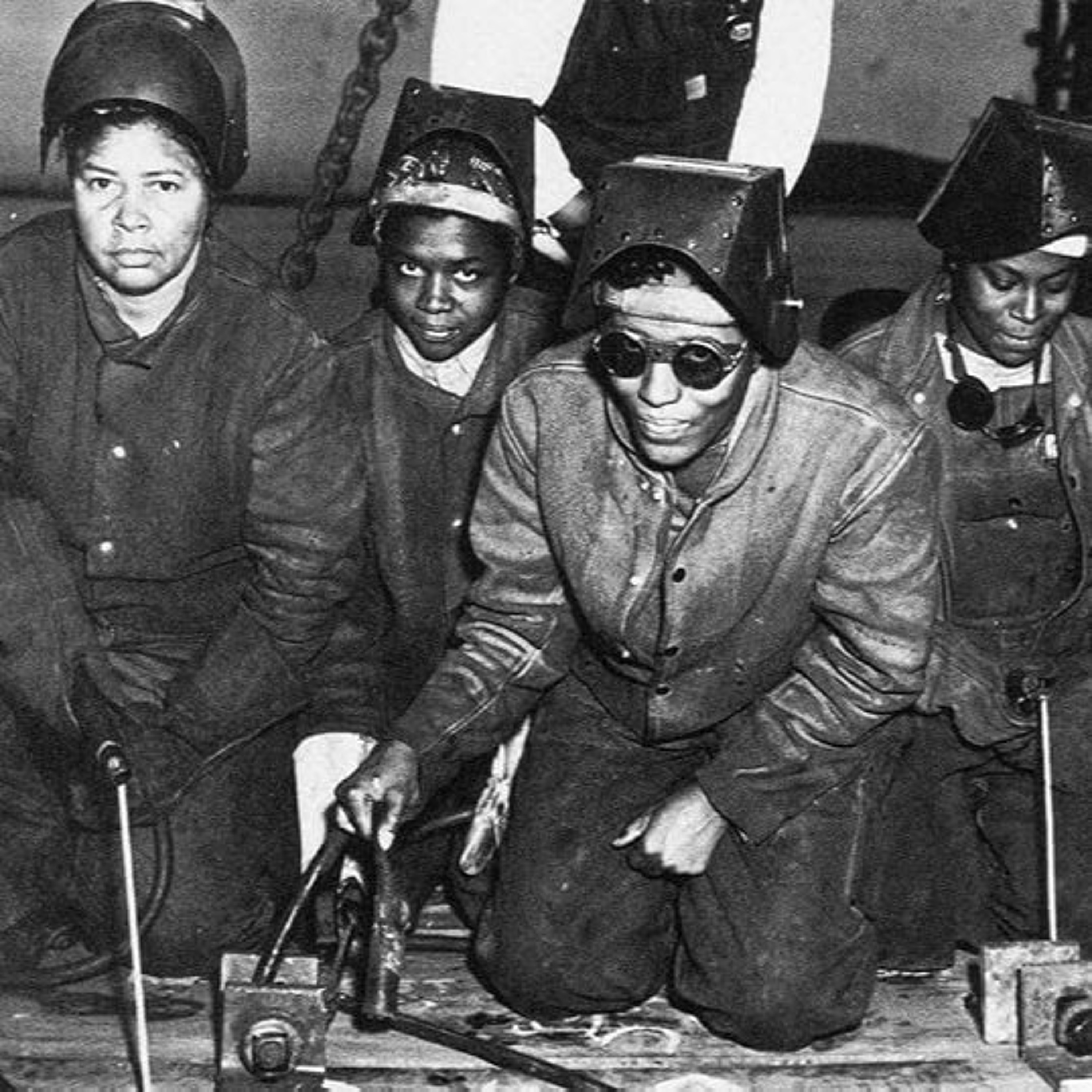
But in his new book, 'Troop Movements', Tejasvi Nagaraja shows how the reality is much more complex, with military mobilisation and the wartime transformation of the US economy producing both new opportunities, and new dangers for Black Americans and all those engaged in anti-fascist and anti-racist struggle.
In the interview we talked about war-time wildcat strikes that aimed at creating better conditions for workers and that contested racism in the workplace.
We went on to discuss the consequences of the export of Jim Crow - with the deployment of racially segregated American units overseas and how that process affected local people and the management of subject populations in the British Empire. And finally, we talked about the post-war upsurge of strikes and protest within the US military - as soldiers deployed overseas demanded to return home, and as they sought to oppose nascent US imperialism and the reimposition of European colonialism in territories that had fallen under the control of Imperial Japan.
More from Politics Theory Other
With Marine Le Pen still riding high in the polls for the French presidency (and projected to defeat whichever candidate she faces in the second round) historian David Broder returns to PTO to talk ab…
Excerpt - French protest movement update w/ Sebastian Budgen by Politics Theory Other
Richard Seymour returns to comment on the current situation in the Ukraine war. We talked about whether either Ukraine or Russia might able to achieve a meaningful victory, the demographic crises faci…
Vivian Gornick on her classic book, 'The Romance of American Communism'. We spoke about her experience of growing up amongst communists and socialists in the Bronx in the 1930s, how she sought to coun…
In a recent long read for the Boston Review, Noura Erakat argued that the Board of Peace represents a new model of governance that aims to circumvent international law, democratic accountability and s…