
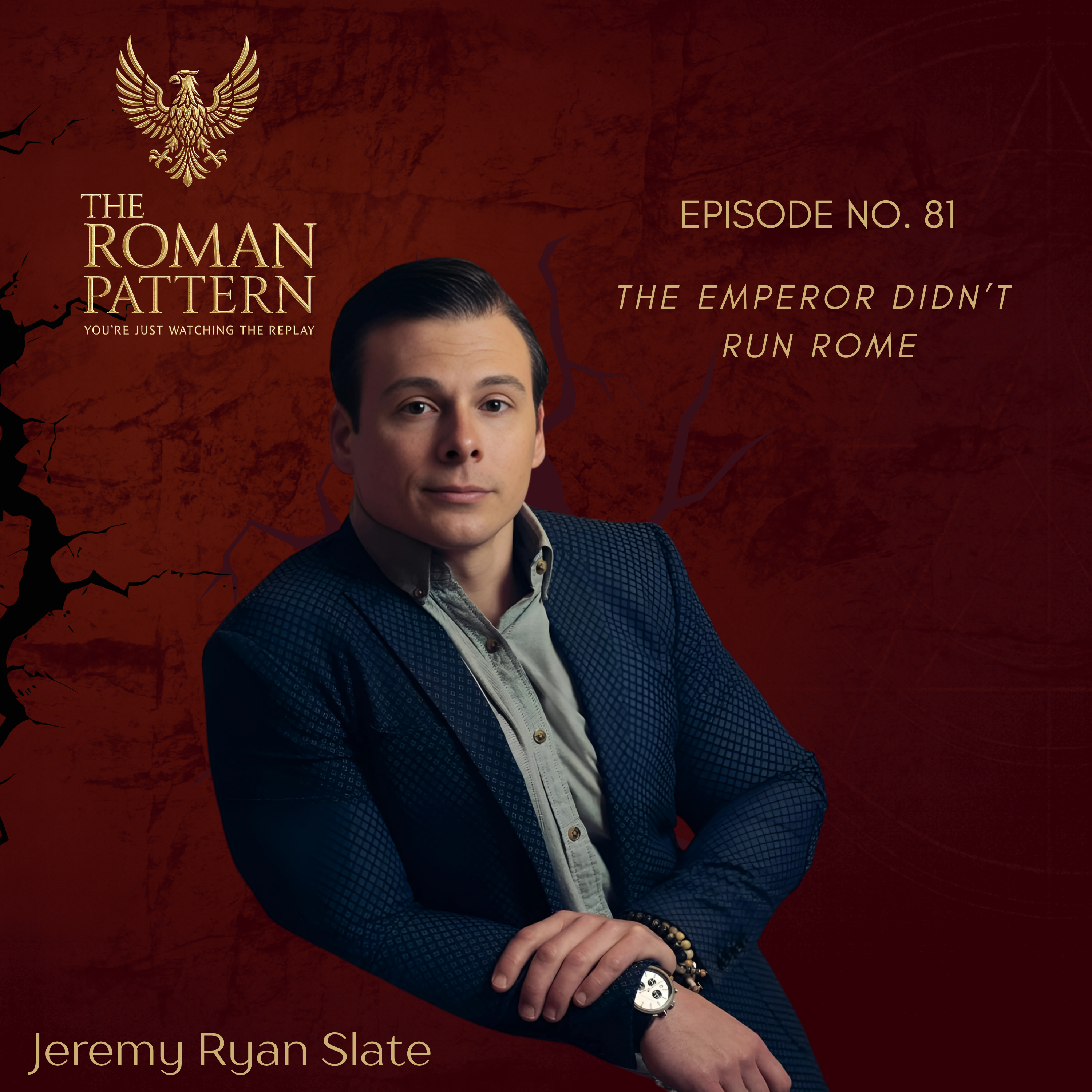
Episode 81 · Season 1
The Emperor Didn’t Run Rome
About this episode
Rome didn’t collapse when emperors died.
It kept running—because they were never in control.
This video breaks down one of the most overlooked mechanisms in Roman history:
how an administrative system designed to stabilize the empire eventually replaced the emperor himself.
During the Crisis of the Third Century, 26 emperors rose and fell in just 50 years.
But the real power didn’t change hands.
The tax collectors stayed.
The clerks stayed.
The men who controlled the records… stayed.
And over time, they controlled something far more powerful than armies:
they controlled information.
This isn’t just Roman history.
It’s a pattern.
CHAPTERS:
00:00 Rome Didn’t Die the Way You Think
00:29 The System That Never Changed
00:59 The Emperor Wasn’t the Government
01:53 The Crisis That Broke the Empire
02:47 Who Was Actually Running Rome?
03:40 Diocletian’s Real Reform
05:02 The Emperor Becomes a Node
06:17 The Men Who Controlled the Files
08:16 Why Bureaucrats Survive Regime Change
09:28 The Kill Chain of Information
10:24 How the System Fed Itself
12:50 The Tax Trap That Broke the Elite
15:04 The Border Failure Nobody Talks About
17:10 The Collapse Begins in Administration
17:58 When the Emperor Became Irrelevant
19:51 The Machine Outlived Rome
22:01 The Pattern Revealed
24:22 How Systems Protect Themselves
26:44 The Final Warning
More from The Jeremy Ryan Slate Show
The fall of the Roman Republic, told in full, from Cincinnatus giving up the dictatorship in 458 BC to Hannibal's slaughter at Cannae, the Gracchi, Marius and Sulla, Spartacus, Crassus and Pompey, Jul…
Scipio Africanus beat Hannibal at Zama in 202 BC, and within about fifteen years the Roman Republic he saved was putting his family on trial while he lived out his last years at Liternum, unwilling to…
The fall of the Roman Republic took about ninety years, from the killing of Tiberius Gracchus in 133 BC to the Second Triumvirate and the proscriptions of 43 BC, and most of the rules that ended it we…
Lucius Quinctius Cincinnatus was named dictator of Rome in 458 BC to rescue a consular army trapped by the Aequi on Mount Algidus, and he gave up absolute power on the 16th day of a six-month term, wi…
Edward Bernays (1891–1995), the Vienna-born nephew of Sigmund Freud, spent most of the twentieth century teaching American business and government how to manufacture public opinion. He is usually call…