
Episode 58 · Season 1
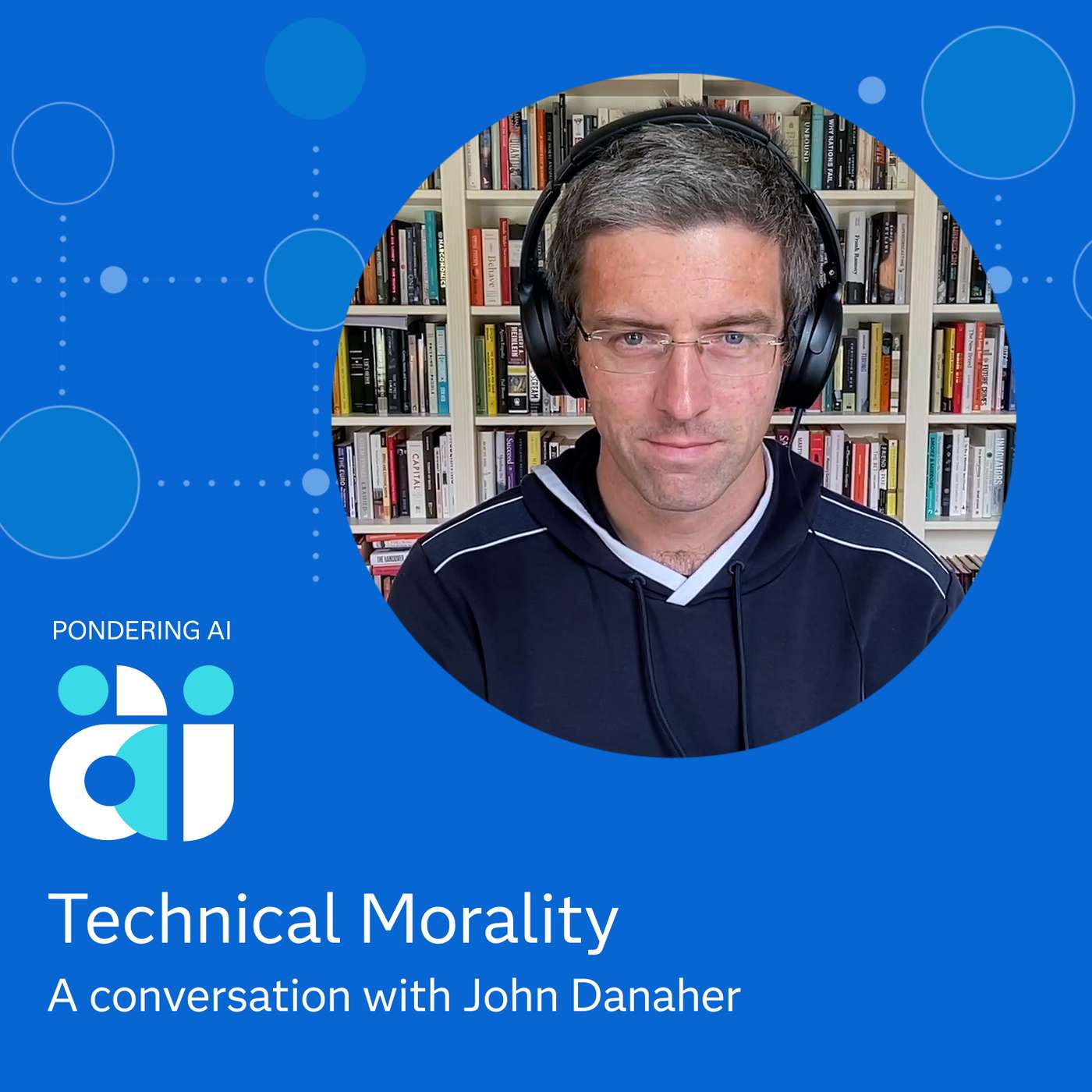
Technical Morality with John Danaher
About this episode
John Danaher assesses how AI may reshape ethical and social norms, minds the anticipatory gap in regulation, and applies the MVPP to decide against digitizing himself.
John parlayed an interest in science fiction into researching legal philosophy, emerging technology, and society. Flipping the script on ethical assessment, John identifies six (6) mechanisms by which technology may reshape ethical principles and social norms. John further illustrates the impact AI can have on decision sets and relationships. We then discuss the dilemma articulated by the aptly named anticipatory gap. In which the effort required to regulate nascent tech is proportional to our understanding of its ultimate effects.
Finally, we turn our attention to the rapid rise of digital duplicates. John provides examples and proposes a Minimally Viable Permissibility Principle (MVPP) for evaluating the use of digital duplicates. Emphasizing the difficulty of mitigating the risks posed after a digital duplicate is let loose in the wide, John declines the opportunity to digitally duplicate himself.
John Danaher is a Sr. Lecturer in Ethics at the NUI Galway School of Law. A prolific scholar, he is the author of Automation and Utopia: Human Flourishing in a World Without Work (Harvard University Press, 2019). Papers referenced in this episode include The Ethics of Personalized Digital Duplicates: A Minimal Viability Principle and How Technology Alters Morality and Why It Matters.
A transcript of this episode is here.
More from Pondering AI
Bérengère Chaintreau-Fuchs envisions a consumer ecosystem grounded in an appreciation for the full range of human experiences and enabled by AI systems worthy of trust. Digital experiences mediated by…
Stuart Mills scrutinizes the value of constraint, the aesthetics of expertise, our mythical quest for the perfect decision and how AI innovation stacks up historically. Kimberly and Stuart discuss the…
Chris Marshall contemplates the interplay of AI sovereignty, agentic AI, cybersecurity and quantum computing and why resilience, not AI, is the top enterprise concern. Kimberly and Chris discuss AI So…
Colin Levy provides counsel on cultivating judgment, acknowledging the human factor and minding more than the tech when adjudicating the governance and use of legal AI. Kimberly and Colin discuss the…
Cecilia Dones guides leaders toward meaningful AI adoption by remaining endlessly curious, prioritizing social connection, valuing deviation, and embracing uncertainty. Kimberly and Celicia discuss co…