
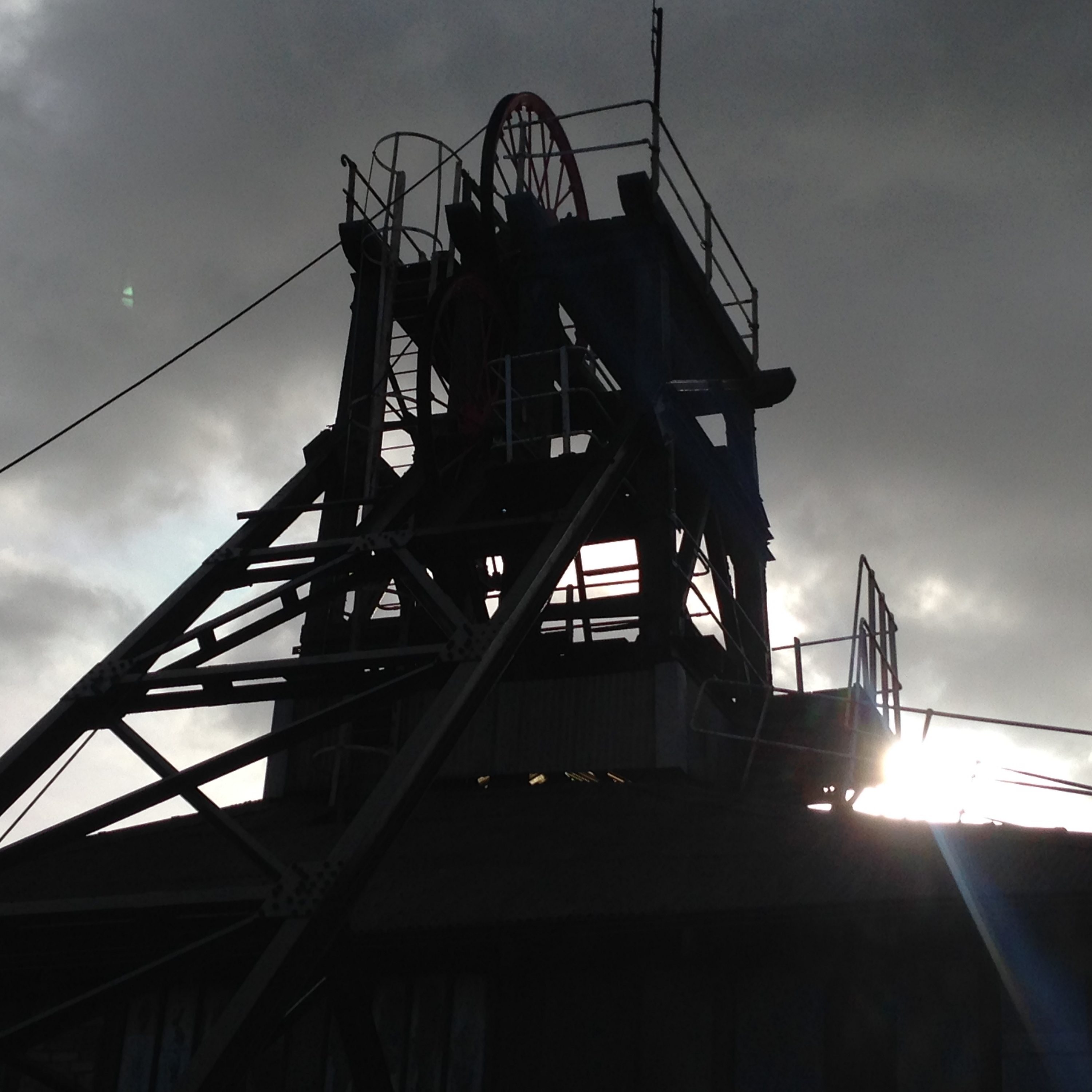
Requiem for a King
About this episode
Tom Heap tells the story of coal from Industrial Revolution to its apparent demise.
As the world begins to fall out of love with coal, is it too early to write its obituary?
Coal drove the Industrial Revolution in this country. It could be argued that it helped to put the 'Great' into Great Britain.
Now, at least in Britain, we're turning our back on the sooty black stuff. The last deep pit, Kellingley Colliery, closed in December 2015 and all of the coal-fired power stations in the UK are set to close in the next decade. Coal is on its knees.
But what about the rest of the world? China and the US have had an enormous appetite for coal and while both will continue to mine and burn the stuff for the coming decades, it is possible that we may have already reached 'peak coal' - the point at which coal demand will plateau, before declining.
Coal will continue to lift developing countries through the various economic growth. It is expected that areas of South Asia will continue to depend on coal to generate power but even in those places they are hoping to implement new, cleaner ways of burning coal. The fuel could be facing a 'long sunset'.
But is there a glimmer of hope?
Carbon Capture and Storage has often been hailed as a potential cure-all for Carbon Dioxide emissions from fossil fuels, so could it step in now to save coal before it is confined to the annals of history?
It may be too early to say. However in Canada there is one commercially operating plant. Many experts believe that we need CCS if we are going to seriously tackle our global CO2 emissions because, at least in the short term, coal will remain on his dusty throne for the coming decades.
Presenter: Tom Heap Producer: Martin Poyntz-Roberts.
More from Costing the Earth
Tom Heap introduces Rare Earth, a programme exploring major stories about our environment.
Steve Backshall lives in a new build house which is very energy efficient and almost totally off-grid. However, achieving this has been extremely time consuming, expensive and pretty stressful. For th…
It's said that a teaspoon of soil contains more life than all of the humans on earth. Microscopic life that is - bacteria, fungi, protozoa, nematode worms and microarthropods like springtails and mite…
Climate resilient gardens are a feature of this month's Chelsea Flower Show, but how can the experts help the typical British gardener prepare for the future? To find out, botanist James Wong asks whe…
Many of us can remember returning our pop bottles to the shop in return for cash and wonder why we can’t use a system like this today to reduce, reuse and recycle. In Scotland a Deposit Return Scheme…