
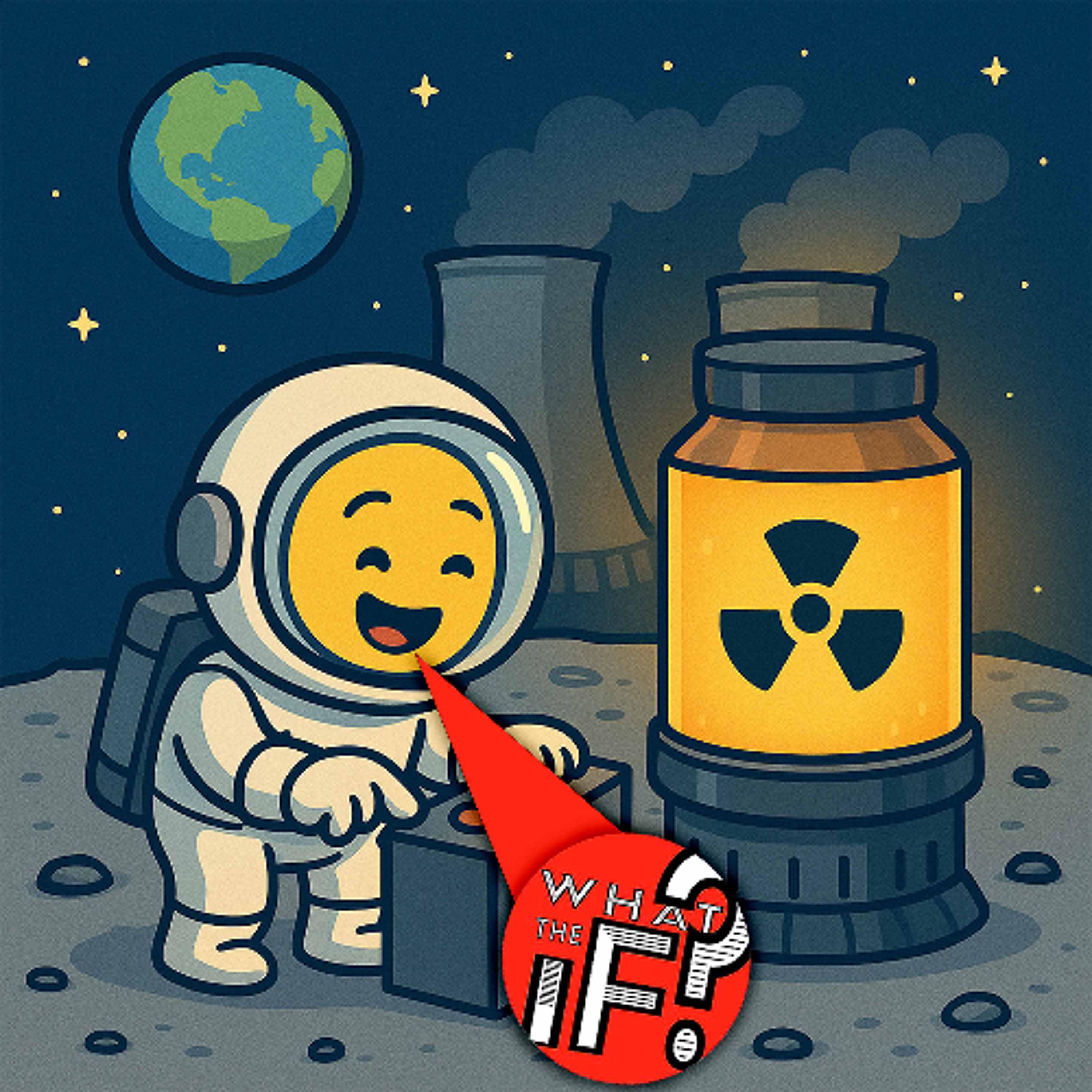
Nuclear REACTORS on the Moon!
About this episode
What the if there was a nuclear reactor on the moon? NASA wants to launch a 100-kilowatt nuclear reactor to the lunar surface before 2030, powerful enough to run about 80 households. From the terrifying "tickling the dragon's tail" experiments at Los Alamos where scientists held uranium chunks apart with just a screwdriver, to the reality that plutonium feels "like holding a rabbit" when you touch it, explore how chain reactions work and why control rods keep reactors from exploding. Because nothing says "home sweet home" like splitting atoms 240,000 miles from Earth.
Based on "NASA Is Getting Fired Up About a Nuclear Reactor on the Moon" by Kenneth Chang, published in The New York Times on Aug. 6, 2025 https://www.nytimes.com/2025/08/06/science/nasa-nuclear-reactor-moon.html?unlocked_article_code=1.ck8.Dvm_.ld6cKROnhA6r&smid=url-share
Find out more about Gaby's science fiction short story!
Here are the links for the anthology. The physical copy can be ordered here : https://www.neonhemlock.com/books/luminescent-machinations-queer-tales-of-monumental-invention
The ebook can be ordered here: https://www.neonhemlock.com/ebooks/luminescent-machinations-queer-tales-of-monumental-invention
More from What The If?
What the if "medieval" were the highest compliment? University of Pennsylvania historian of science Elly Truitt is our guide on a mission to rescue the Middle Ages' reputation. You'll meet scholars 90…
A City Inside A LAVA TUBE! by Philip Shane, Matt Stanley, Gabrielle Paniccia
Picture a world where we all grow a suit of armor right out of our skin, so heavy that if we tried to swim, we'd sink like a rock! In this episode you'll learn how some ants turn the carbon dioxide in…
Happy Halloween! This week we're getting spooky and asking: what the if vampires were real, and scientists got to study them up close? You'll learn why our bodies slowly lose the knack for swapping ol…
Picture a world where you skip lunch, step outside, and let your skin soak up a meal from the sun. In this episode we explore that fanciful scenario. Along the way you'll learn how plants first got th…