
Murder at Crowhurst: A Tudor Cold Case
About this episode
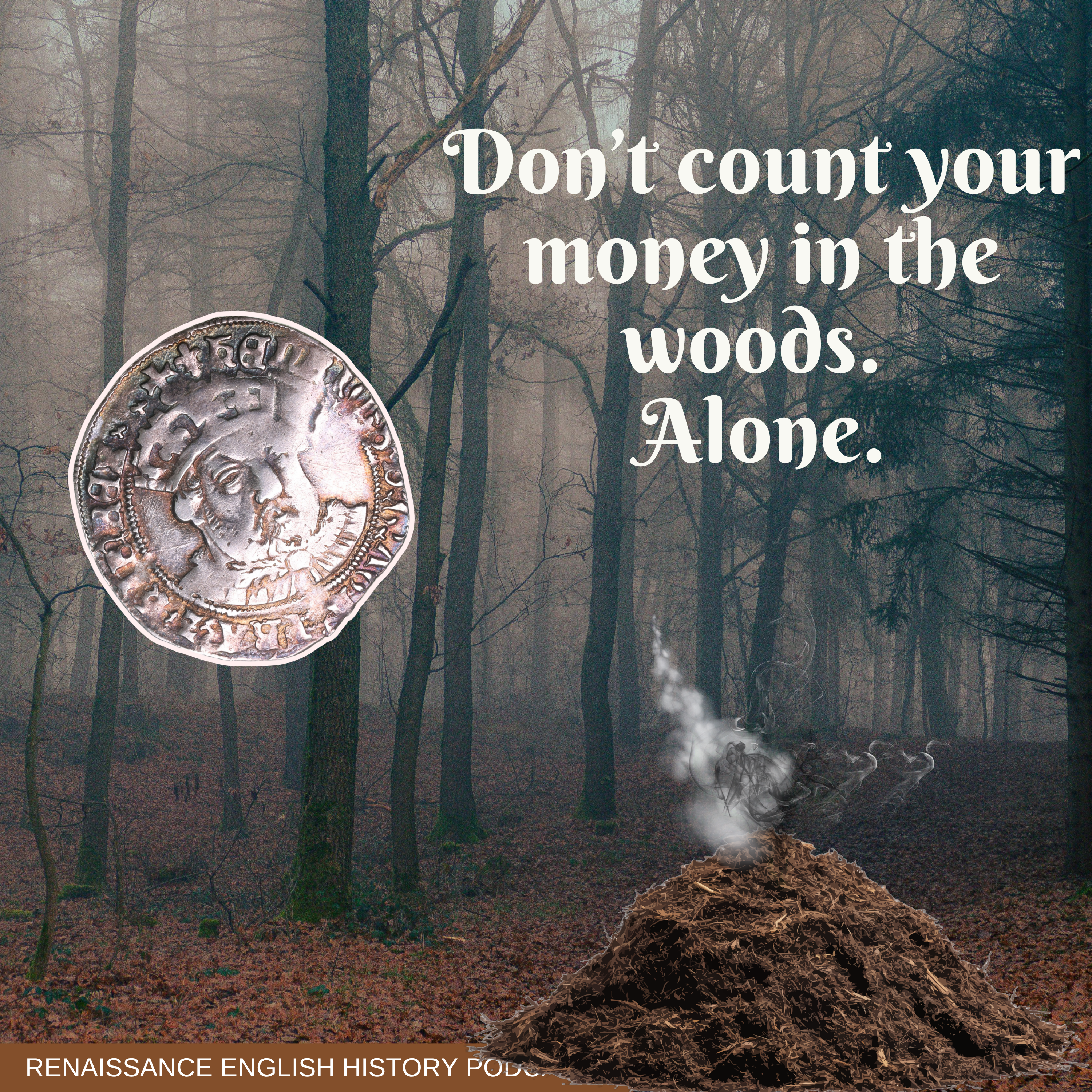
In August 1532 a charcoal burner named Robert Grame was murdered in a wood in Surrey. He worked alone, he carried a checkered board so he could count his money out there among the trees, and half the county seems to have known it.
What happened next is why we can still tell this story. The local justice of the peace, Sir John Gaynesford, was an old man who had no obligation to do any of this well, and he did it beautifully. He examined the body, checked for signs of suicide because a widow's survival depended on the answer, found a broken knife handle, took depositions from witnesses more than twenty years before the law required it, and eventually hauled his suspect in front of the Privy Council in Westminster. When that went nowhere, he wrote nine folio pages to Thomas Cromwell and told him he would rather leave the county than keep living like this.
And then the case vanishes from the record entirely.
This episode is about who Robert Grame was, what Gaynesford did, what probably happened to Anastasia Grame, and how much of the past is missing from the documents we have left.
Follow the show so the next one turns up on its own. The autumn collection is up at TudorFair.com, including Bonfires and Boleyns and Sweater Weather and Sovereigns.
Source: William B. Robison, "Murder at Crowhurst: A Case Study in Early Tudor Law Enforcement," Criminal Justice History. The underlying document is Gaynesford's report to Cromwell, State Papers 1/72/76-87, at The National Archives.
Learn more about your ad choices. Visit megaphone.fm/adchoices
More from Renaissance English History Podcast: A Show About the Tudors
In the summer of 1599, a Scotsman called Bartilmo Kello was stuck in London, waiting to be paid. He'd delivered a gorgeous little book of Psalms to Elizabeth I, bound in velvet with a pearl-studded Tu…
In August 1600, a Moroccan ambassador landed at Dover with a secret mission. Abd el-Ouahed ben Messaoud had come to Elizabeth I's court with an offer from Sultan Ahmad al-Mansur. Join forces with Moro…
Henry VIII is one of those people everybody has already made up their mind about. Golden young prince turns into a paranoid tyrant who goes through six wives. But what actually happened to him? At Tud…
Anne Boleyn’s mother is one of the hardest women in the whole Tudor century to find. Most books give her a sentence or two and move on. So I went looking properly, through the letters, the gift lists…
Were There Jews in Tudor England? Physicians, Musicians and Spies at the Tudor Court | TudorCon 2026
Officially, there were no Jews in Tudor England. Edward I expelled them in 1290, and they weren’t let back in until Cromwell in the 1650s. But as Barbara Barnett shows, “no Jews in England” was more o…