
Lightning Strikes: China’s Robot Revolution
About this episode
In the second episode of our series, China Rules, we look at an industry dominated by China: humanoid robots. Beijing’s running, dancing and fighting robots are more than just a gimmick; the country’s 15th Five-year Plan puts robotics right at the heart of its modern industrial system. China already accounts for 80% of global humanoid robot installations. In a recent half marathon, a humanoid robot called Lightning left the real humans behind for the first time, breaking the tape in just over 50 minutes. To discuss the future of the robot wars, Louisa and Graeme are joined by Alberto Moel, former Vice President of Veo Robotics, now with the University of Hong Kong, and Chang Che, a freelance writer who was formerly the Asia technology correspondent for the New York Times.
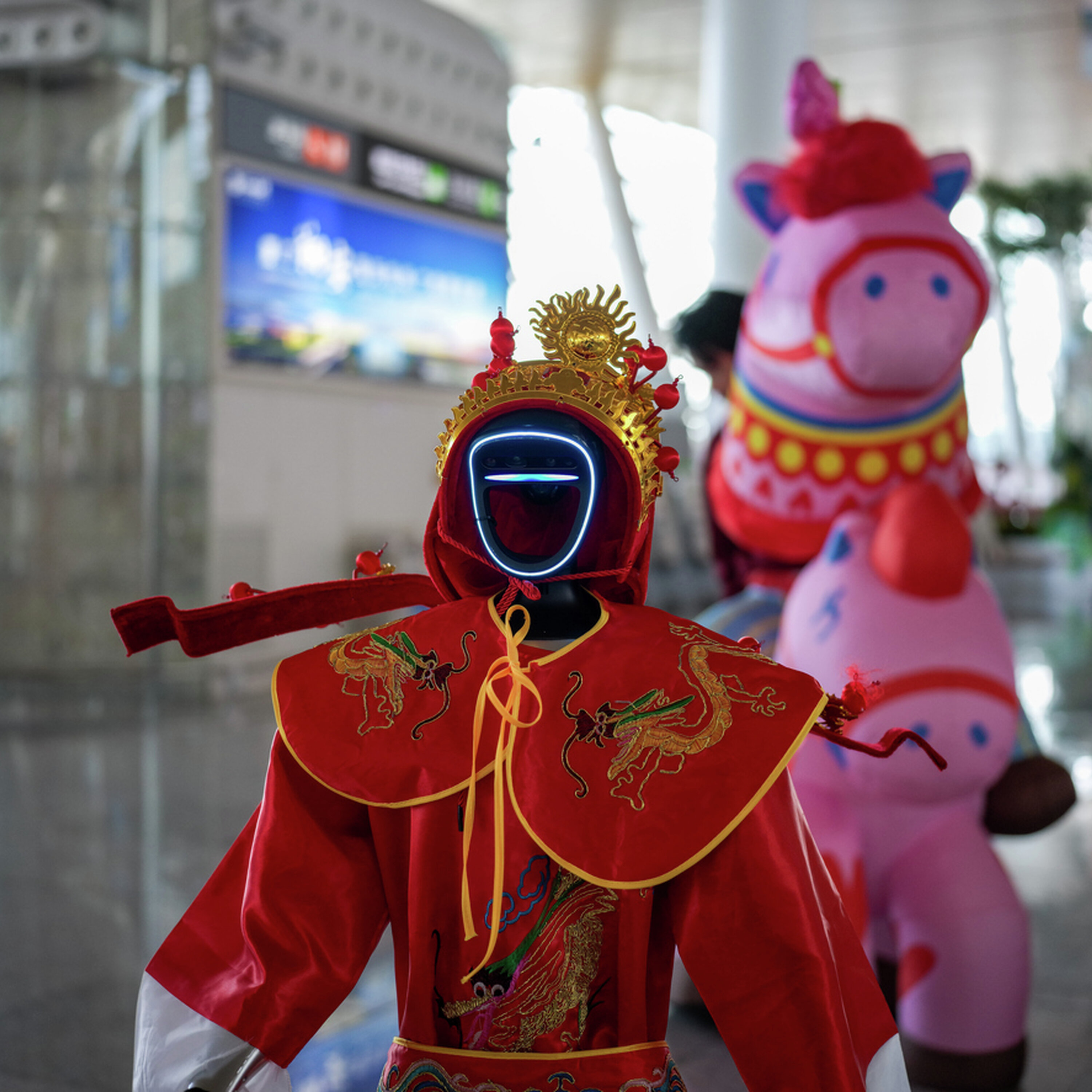
Image: Robot in Traditional Attire at Airport Hall, c/- iStock photos, Daqian Wang, 25 February 2026.
Transcripts available at https://ciw.anu.edu.au/podcasts/little-red-podcast
See omnystudio.com/listener for privacy information.
More from The Little Red Podcast
In the sixth episode in our China Rules series, we examine China’s purge of its banks. China’s banks are three times bigger than the US banking system, holding assets worth $60 trillion – equivalent t…
In the fifth episode in the China Rules series, we look at China’s efforts to reshape to global financial system. One milestone has been the recent designation of Deutsche Bank as a renminbi clearing…
In our fourth episode of the China Rules series, we look at the State Council’s brand-new rules on overseas investment. These formalize central control over outbound investment, addressing the Party’s…
In the latest episode in our China Rules series, we look at the rise and potential fall of China’s electric vehicle (EV) industry. Once scoffed at by Elon Musk, China’s EV industry is charging ahead i…
In our new series—China Rules—we look at how China is a global exporter, not just of goods, but also of standards, ideas, technologies and mechanisms of control. We’re starting with politics, and whet…