
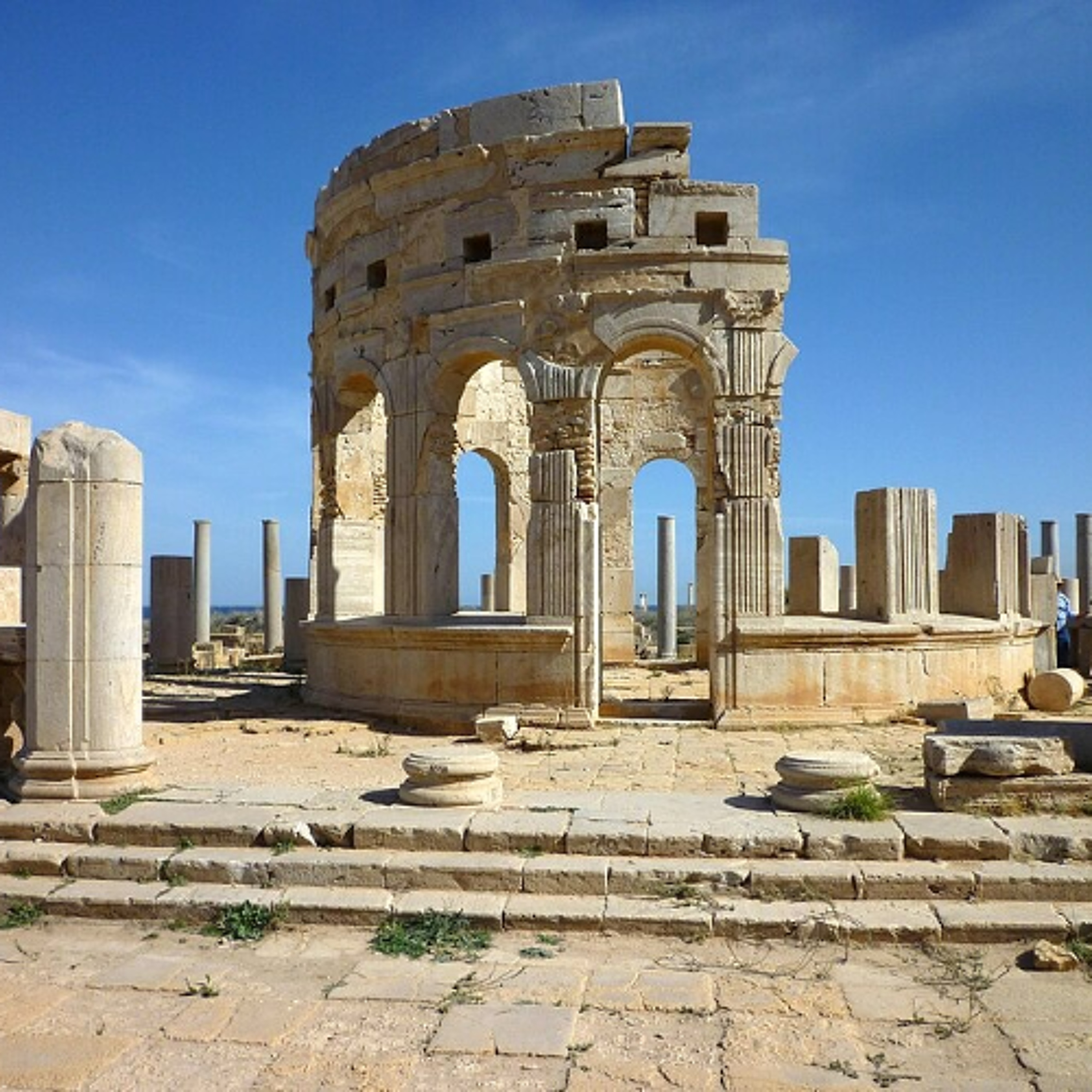
Lepcis Magna
About this episode
Lepcis Magna had much in common with Roman cities in Northern Africa - former colonies, built on the coast next to a river, and a blend of Roman and local cultures. So it would have continued until the late 2nd century, when Septimius Severus, a local lad who made it big, became the Rome’s newest emperor.
Guest: Dr Niccolò Mugnai (Assistant Professor at the Institute of Classical Archaeology at the University of Tübingen, Germany)
More from When in Rome
The Theatre of Marcellus is a perfect example of the changing tastes of Rome in the late Republic. As plays became more popular, permanent structures were built, in this case in the Campus Martius on…
The Baths of Diocletian was a huge imperial public building, built on the scale that Rome rarely saw during the early years of the fourth century. Designed to outshine previous public bath projects, w…
In this episode When in Rome travels further west than it has ever gone before, to the Roman fort in Caerleon, headquarters of the Legion II Augusta, close to the River Usk in modern day Wales. German…
In the Roman period, Nea Paphos was the capital of Cyprus and a thriving centre of administration, culture, and commerce. Its theatre—first built in the Hellenistic age and later transformed under Rom…
As a prominent coastal city on the island of Cyprus, Salamis had a lot to offer the Romans. Well situated in the middle of the Mediterranean, it was the perfect location for maritime trade, as well as…