
Episode 1816 · Season 1
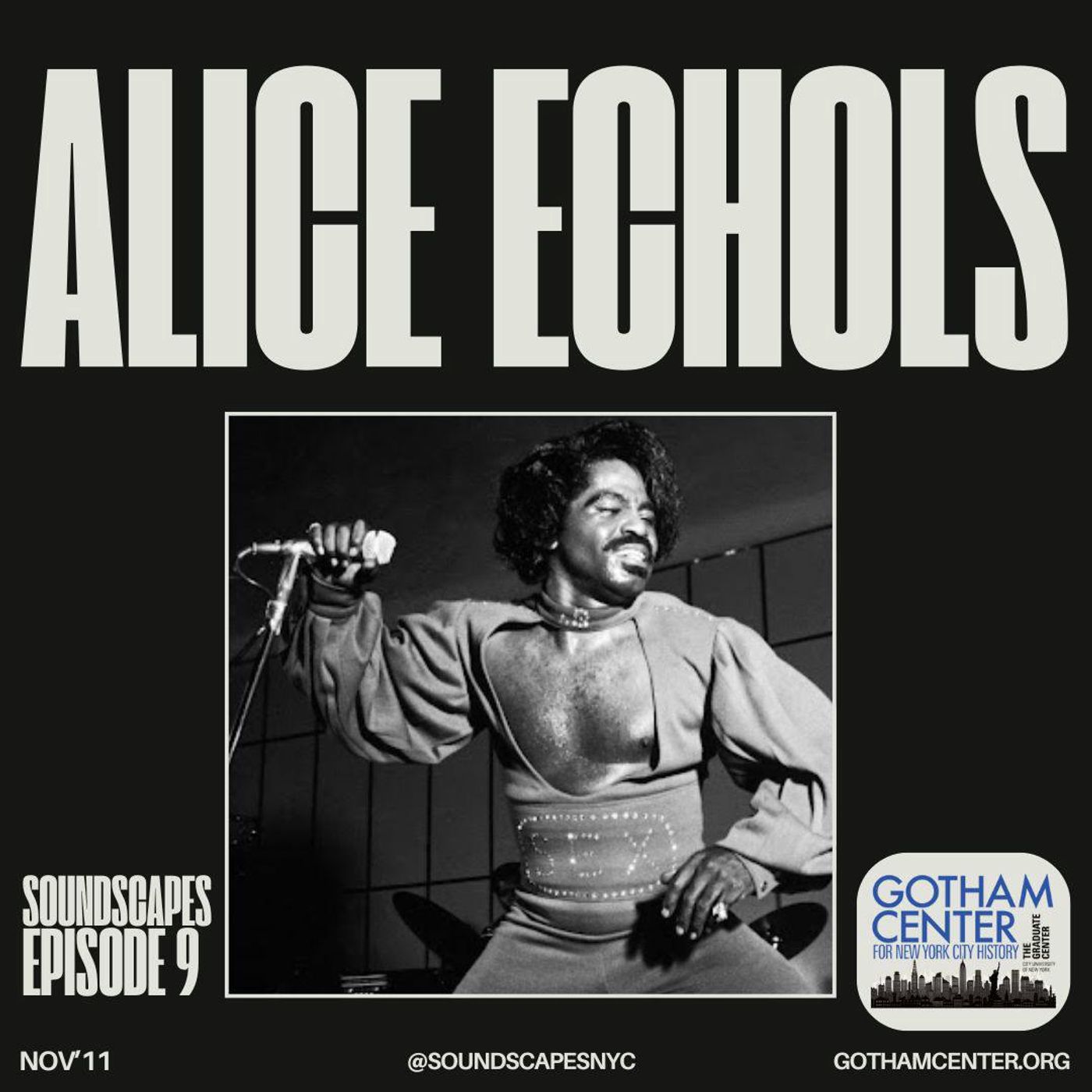
James Brown's War on Disco
About this episode
In the penultimate episode of season 2 of Soundscapes NYC, hosts Ryan Purcell and Kristie Soares sit down with acclaimed historian Alice Echols, author of Hot Stuff: Disco and the Remaking of American Culture. Echols—who holds the Barbra Streisand Chair of Contemporary Gender Studies at the University of Southern California—unpacks how disco not only mirrored but actively shaped the social, racial, and sexual revolutions of 1970s New York City. Echols is the author of several books that have framed the way we understand the history of the 1960s and 1970s, and particularly the way music has shaped society at the intersection of gender, sexuality, and race.
The conversation begins with Echols’ newest research, drawn from her forthcoming book Black Power, White Heat: From Solidarity Politics to Radical Chic, which reexamines interracial activism and allyship during the Black Freedom Movement. From the Angela Davis trial to the alliances formed within SNCC and the Black Panther Party, Echols traces how solidarity both flourished and fractured across the era.
Turning to disco, she considers disco’s uneasy place in Black and queer cultural history. She notes how disco was created by and for Black audiences, while also being rejected by many in the Black music industry, like James Brown, for being “politically empty.” Through figures like Nile Rodgers, Grace Jones, and Sylvester, Echols argues that disco’s lush orchestration and sensual performances reflected radical redefinitions of gender, sexuality, and Black masculinity.
With musical excerpts woven throughout, Purcell and Soares guide listeners through the sonic textures of disco—its roots in funk and soul, its resistance to genre boundaries, and its capacity to move bodies and politics alike.
Support our show by becoming a premium member! https://newbooksnetwork.supportingcast.fm/african-american-studies
More from New Books in African American Studies
Coastal Louisiana is losing land at an unprecedented rate, and in response, scientists and policymakers have turned to massive restoration projects to slow the erosion. Good Sediment enters this charg…
In the decades after Reconstruction, African Americans were systematically removed from the electorate in the American South using tools such as poll taxes and literacy tests. Stolen Representation: B…
For centuries, Black women in America have experienced extreme rates of arrest, conviction, and incarceration in the nation’s jails and prisons, yet their experiences have often been overlooked in fav…
In his celebrated address “What to the Slave is the Fourth of July?” Frederick Douglass denounced America’s hypocritical celebration of freedom. But he did not blame the nation’s founding document for…
Founded in 1935, the New Farmers of America (NFA) was the first national organization for Black farm boys studying vocational agriculture at segregated public high schools across the South—and as far…