
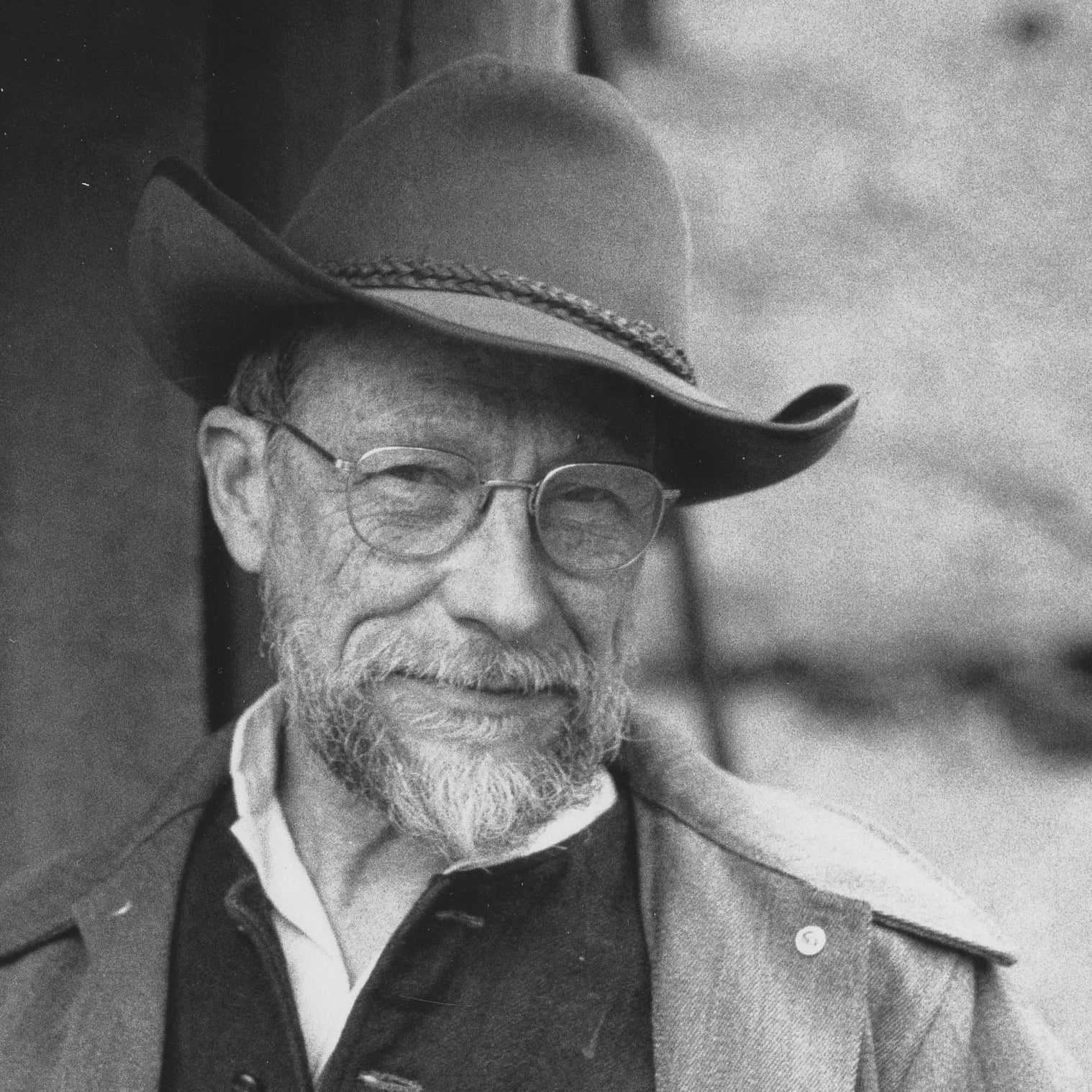
"Four Changes" by Gary Snyder
About this episode
In July 2016, Jack Loeffler recorded Gary Snyder reading his updated version of 'Four Changes' in his home. This recorded version was prepared for and included in a major exhibition held at the History Museum of New Mexico at the Palace of the Governors in Santa Fe.
The exhibition was entitled 'Voices of Counterculture in the Southwest', and Snyder's rendering of 'Four Changes' aptly conveyed how deeply the counterculture movement helped nurture the emerging environmental movement. The impact of this manifesto is as powerful today as it was a half century ago and could not be more timely.
Four Changes at Age 50: A Celebration on the Environmental Movement’s First Manifesto of Contemplative Ecology
Introduction by Diana Hadley, Jack Loeffler, Gary Paul Nabhan and Jack Shoemaker
In the months before the first Earth Day in April 1970, mention of a prophetic manifesto seemed to crop up in nearly every serious discussion of what the nascent environmental movement should be and what values it should embody. That manifesto was conceived and shaped in the summer 1969, as poet Gary Snyder toured a number of college campuses around the United States and then entered into deeper discussions with a number of other poets, visionaries and activists in the San Francisco Bay area. Affectionately called “Chofu” by other radical environmentalists during that time, Snyder gradually refined their collective vision into a ten page draft document that became what we now know as Four Changes.
Several features of this manifesto were then, and still are, unique in the canon of writings considered foundational to the environmental movement. Snyder’s literary gifts shine through the manifesto with prescient, poetic and playfully comic qualities to them. The tone seemed as fresh and as “out of the box” as Leaves of Grass must have sounded when Whitman first sowed it onto the American earth a century earlier. The manifesto called for a radical shift in our relationship with the planet through changing the way we perceive population, pollution, consumption, and the transformation of our society and ourselves. In this manner, it foreshadowed later expressions of ecological thought that we now call contemplative ecology and deep ecology.
While it was in many ways anchored in Buddhist teachings, it was also precise in its understanding of modern ecological science and respectful of the place-based wisdom of the traditional ecological knowledge of the many indigenous cultures of the world. It did not privilege Western science over other ways of making sense of the environment, but welcomed dialogue and integration of many distinctive expressions.
Four Changes was also rooted in a mature understanding of the political ecology of power dynamics and disparities in access to resources that were ravaging our planet, its biological and cultural diversity. Parts of it were so pertinent to these issues that it was read into the Congressional Record on April 5th, 1970--- two and a half weeks before Earth Day flags were unfurled all around the world. In that sense, it was perhaps the first robust articulation of what we now call a yearning for environmental justice. Still, the tone was hopeful—that humankind could learn to respect, learn from and embrace the other-than-human-world. As Snyder later paraphrased one of the tenets of Four Changes, “Revolutionary consciousness is to be found among the most ruthlessly exploited classes: animals, trees, water, air, grasses.” It is time to heed the call of the prophetic Four Changes.
More from Bioneers: Revolution From the Heart of Nature
Brett KenCairn, Founding Director of the Center for Regenerative Solutions says a radical redirection of climate solutions is imperative if we have any chance of solving the climate emergency. The key…
Drop in on a remarkable conversation between two world-renowned Native American women artists. National Poet Laureate and musician Joy Harjo riffs with renowned photographer Cara Romero. They discuss…
Since time immemorial, storytellers have held an exalted role in human societies, because stories illustrate parables that help us make sense of the world and survive. In this episode, we hitch a ride…
The late world-renowned feminist, writer and change-maker Gloria Steinem connects the dots among disparate social movements to reveal the common patterns of oppression that underlie them all. From gen…
Globally, women experience some of the harshest challenges in wartime and the climate crisis while simultaneously remaining caretakers to their families, communities, and the Earth. Zainab Salbi is a…