
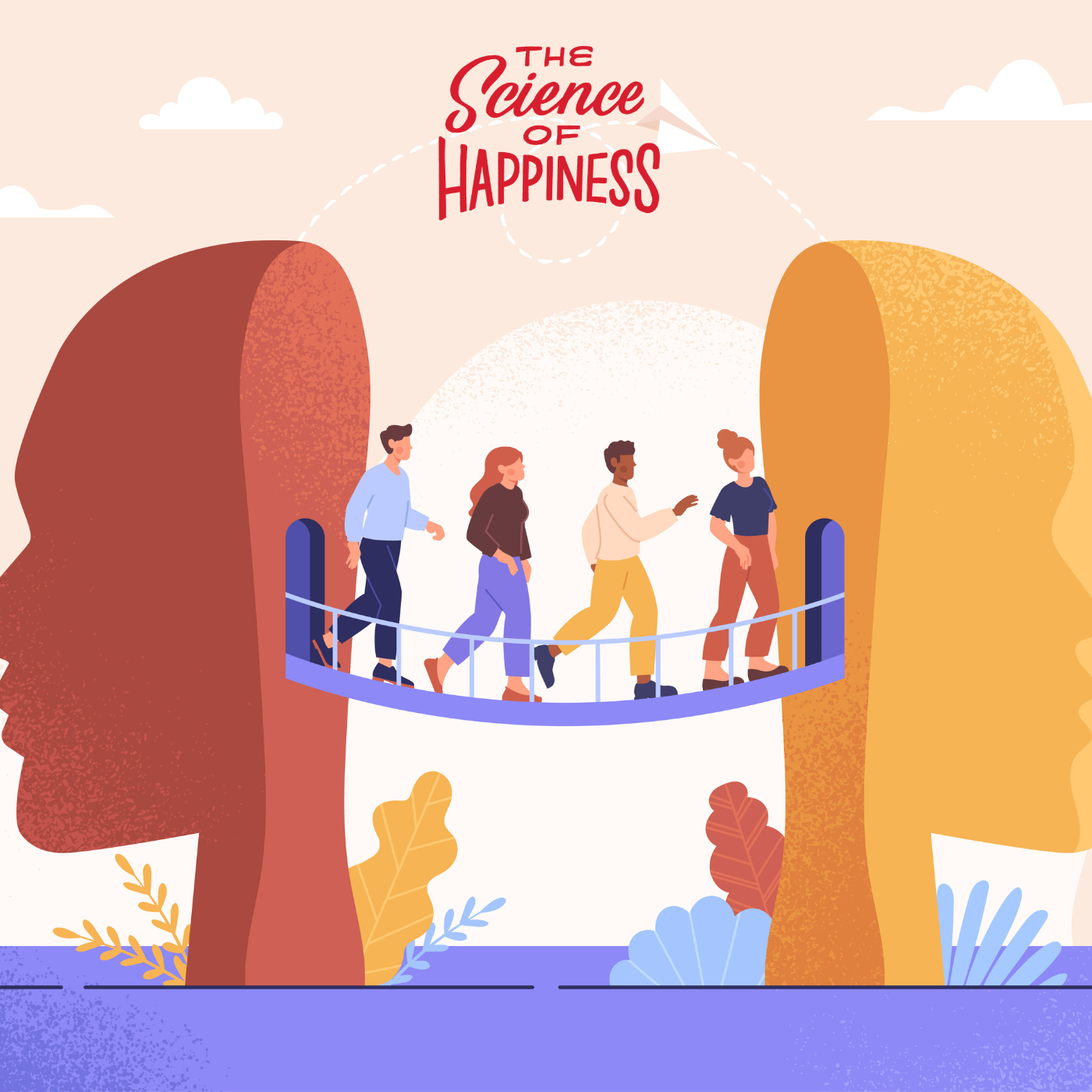
Finding Common Ground in Uncomfortable Times
About this episode
Across school campuses and communities, students and educators are discovering how listening, curiosity, and everyday conversations can open pathways across differences and help restore a sense of shared humanity.
Summary: How do we learn to truly communicate with people who are deeply different than us? In this episode of The Science of Happiness, we follow students and educators practicing the skills of empathy and courageous listening in classrooms and on the road. Their experiences reveal how intentional conversations can open unexpected pathways toward understanding and shared humanity.
How To Do This Practice:
Observe Before You Interpret: Spend a few minutes noticing the environment around you and ask yourself: What do people here see, hear, say, think, and need?
Approach with Curiosity: Start with simple human connection—small talk, a question about their day, or genuine interest in their community.
Signal That You're There to Listen: Make it clear your goal is understanding, not persuading, debating, or changing anyone's mind.
Practice Democratic Listening: Give your full attention through eye contact, nodding, and brief acknowledgments, while resisting the urge to agree, disagree, or jump in with your own views.
Stay Relaxed Through Discomfort: When differences emerge, maintain "relaxed awareness"—remaining open, attentive, and calm rather than defensive or reactive.
Reflect and Learn: Afterward, ask yourself: What helped create connection? What got in the way? What might I try differently next time?
Scroll down for a transcript of this episode.
Today’s Guests:
JESSE KELLY is a McNair and MacArthur fellow and a recent graduate of Bowie State University, Maryland's oldest historically black university.
Learn more about Jesse Kelly here: https://www.linkedin.com/in/jessekellyjr/
LIA HOWARD is the director of the Political Empathy Lab at the University of Pennsylvania.
Learn more about Lia Howards here: https://snfpaideia.upenn.edu/people/lia-howard/
Related The Science of Happiness episodes:
How to Feel Less Lonely and More Connected: https://tinyurl.com/2s3tbchd
When It's Hard To Connect, Try Being Curious: https://tinyurl.com/mr32nwtv
An Awe Walk Through History and Possibility: https://tinyurl.com/mr3arrbc
Related Happiness Breaks:
A Meditation on Original Love and Interconnectedness:https://tinyurl.com/mu2uzs2c
Our Deep Interconnectedness: https://tinyurl.com/y2epxyxn
Message us or leave a comment on Instagram @scienceofhappinesspod. E-mail us at [email protected] or use the hashtag #happinesspod.
Help us share The Science of Happiness! Leave us a 5-star review on Apple Podcasts or share this link with someone who might like the show: https://tinyurl.com/2p9h5aap
Transcription: https://tinyurl.com/3bt8fpdj
More from The Science of Happiness
What if our cities were designed to help us slow down, take in the world around us, and connect with the people we encounter every day? Social anthropologist and urban designer Louise Vogel Kielgast s…
What if you could fall in love, or forge deep connections, in just 45 minutes? Our guests, Kristen Meinzer and Jolenta Greenberg of By The Book podcast, try out 36 questions with their partners to see…
Psychologist and meditation teacher Tara Brach explores how practicing kindness and compassion can strengthen our relationships, ease loneliness, and help us feel more connected to others. Summary: Ki…
Discover how practicing acceptance can help you let go of fear, open your heart, and meet life's challenges with greater love and compassion. How To Do This Practice: Begin With Acceptance: Take a mom…
Discover how writing about our ancestors can strengthen our sense of identity, deepen gratitude, and help us find meaning in our own lives. Summary: What happens when we take time to imagine the lives…