
Episode 546 · Season 1
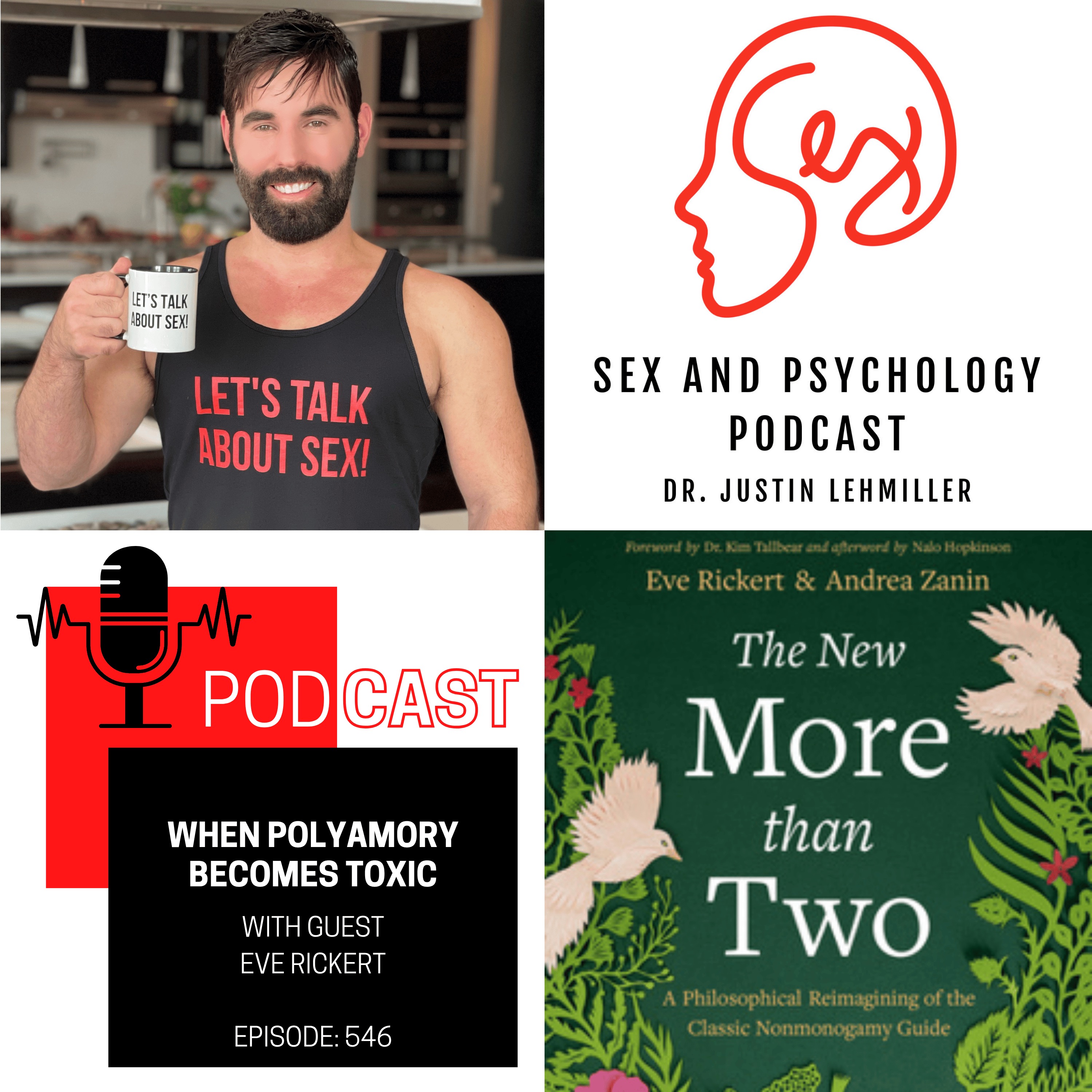
Episode 546: When Polyamory Becomes Toxic
About this episode
Polyamory is sometimes described as a more “evolved” approach to relationships, built around radical honesty, open communication, and personal autonomy. This can create the impression that polyamorous relationships are somehow immune to the problems that plague other relationships. But the reality is that non-monogamous relationships can become unhealthy, toxic, and even abusive, just like any other relationship. And that's what we're exploring in today's episode.
My guest is Eve Rickert, the co-author of The New More Than Two: A Philosophical Reimagining of the Classic Nonmonogamy Guide. She is also author of Nonmonogamy and Betrayal, curator of the More Than Two Essentials series, the founder and publisher of Thornapple Press, and the mastermind behind the science communications firm Talk Science to Me.
Some of the specific topics we cover include:
- Does abuse look different in consensually non-monogamous relationships compared to monogamous ones?
- What's the difference between coercive control and toxic behavior?
- Can having multiple partners make it harder to recognize abuse?
- What are the warning signs that a relationship has become more harmful than healthy?
- What resources are available for people experiencing abuse in a non-monogamous relationship?
You can check out Eve's Linktree to learn about everything she's working on.
Got a sex question? Send me a podcast voicemail to have it answered on a future episode at speakpipe.com/sexandpsychology.
***
Thank you to our sponsors!
If you’re ready to make passion a priority, see what Arya can do for you. Right now, Arya is offering our listeners $10 off your first month at getarya.com/JUSTIN. This offer is only for our podcast listeners so use my link to get this discount.
If you're ready to ditch the shady stuff and choose a libido supplement that’s effective and that you can feel confident about, it's time to check out Load Boost. Visit vb.health and use code JUSTIN for 10% off.
If you're looking to gain a broad understanding of human sexuality or refresh your knowledge, check out the upcoming Human Sexuality Intensive courses at the Kinsey Institute: https://kinseyinstitute.org/learning/human-sexuality-intensive.html
***
Want to learn more about Sex and Psychology? Click here for previous articles or follow the blog on Facebook, Twitter, or Bluesky to receive updates. You can also follow Dr. Lehmiller on YouTube and Instagram.
Listen and stream all episodes on Apple, Spotify, or Amazon. Subscribe to automatically receive new episodes and please rate and review the podcast!
Credits: Precision Podcasting (Podcast editing) and Shutterstock/Florian (Music). Image created with Canva; photos used with permission of guest.
More from Sex and Psychology Podcast
Thanksgiving is a time to reflect on the things we're grateful for, but when was the last time you stopped to appreciate your sex life? In this episode, we're exploring the surprising connection betwe…
Today's college students have grown up with more sexual content at their fingertips than any generation in history. So why do so many of them still struggle to understand their own bodies and desires?…
For centuries, people have been warned that masturbation could cause everything from hairy palms to blindness to insanity. Although these claims have been thoroughly debunked, anti-masturbation messag…
We hear a lot about the importance of sleep, exercise, nutrition, and mindfulness for our health. But what about sexual pleasure? In this episode, we’ll explore a fascinating new study on how masturba…
Interest in kink is on the rise, and a growing number of people are curious about exploring it in the bedroom. But what does it actually take to be good at BDSM? While you might think it's all about m…