
Episode 24 · Season 1
Being Alive with Melanie Challenger
About this episode
Our obsession with the dream of artificial, disembodied intelligence is deadening our experience of life itself. Melanie Challenger — a philosopher, naturalist and National Geographic Explorer — says it’s time to let go of the centuries-old human history of pretending we’re not animals, of separating ourselves from the rest of the natural world. The essence of life, she says, is being a body — the source of the agency, purpose and intelligence that defines every living being, from the plant turning toward the sun to the hawk diving for its prey, to the child reaching for her mother.
In two poetic and rigorously argued books, “How To Be Animal," and “Alive: The Hidden Intelligence of the Natural World," Challenger makes the case for restoring meaning to organisms — a project that is both scientific, philosophical, and profoundly moral. It also offers a path toward re-enchantment: a way to think about how to revive a sense of the pulsating aliveness that surrounds us, and about what might follow if we did.
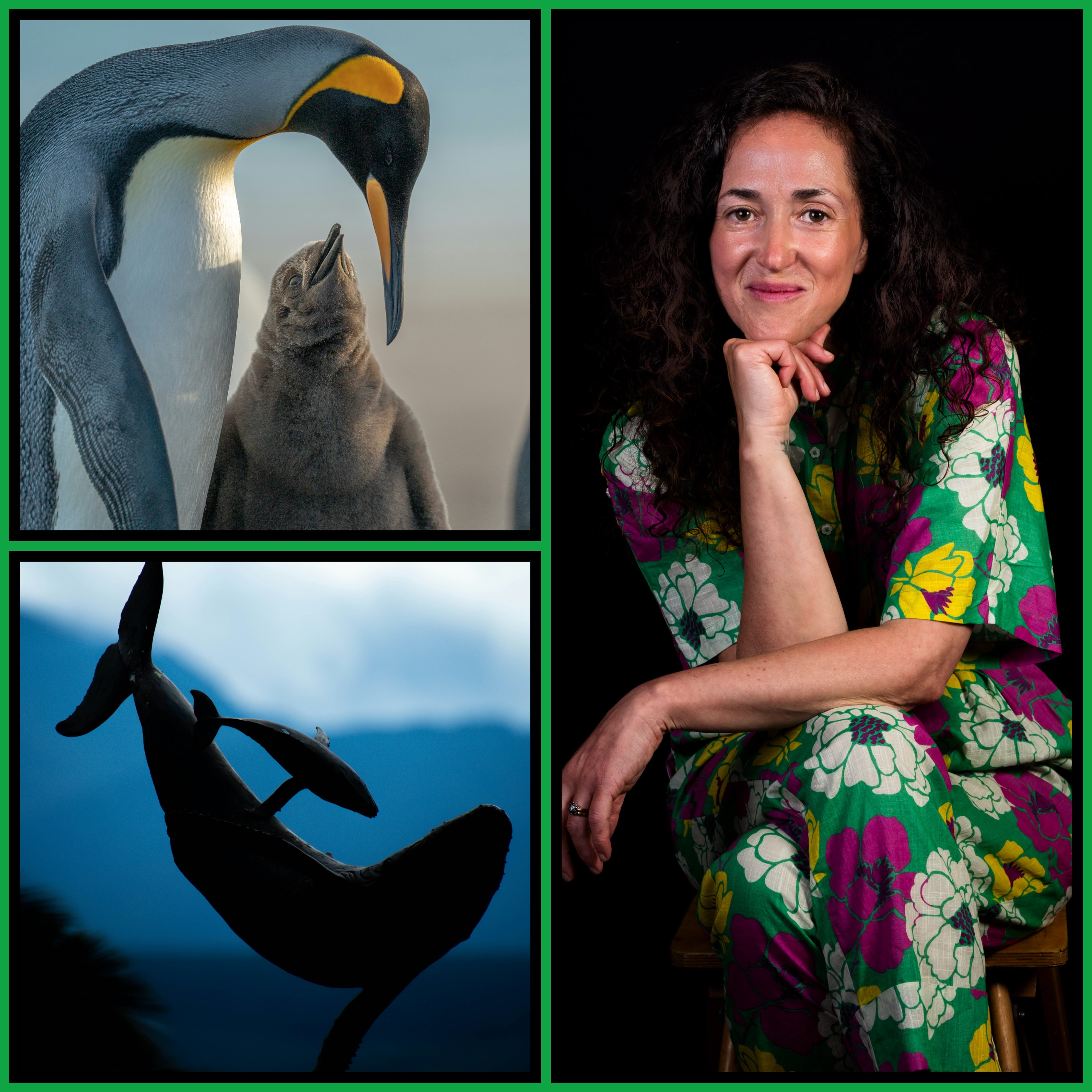
In this conversation, Challenger talks about her early work with survivors of genocide and war crimes, which led her to think deeply about the psychology of dehumanization. She recounts her first, lyrical trips as a naturalist and writer-in-residence in the Sub Antarctic and following blue whales off the coast of Costa Rica. And she talks about her re-discovery of Aristotle, the ancient philosopher whose concept of life as “en-soulment” showed her how to redefine what it means to be alive.
This interview was recorded at the Island of Knowledge think tank in Tuscany, a project supported by Dartmouth College and the John Templeton Foundation.
—
00:00:00 Intro
00:05:00 War Witness to Naturalist
00:18:00 Beyond the Machine Body
00:27:00 Sequoia Seed and Aristotle
—
Website
Book: “How To Be Animal”
Book: “Alive: The Hidden Intelligence of the Natural World”
—
More from Wonder Cabinet
In the hills near Siena, at a small think tank called the Island of Knowledge, Anne Strainchamps sits down with two physicists who believe modern science needs to remember its roots. Marcelo Gleiser,…
Where do you turn when your life falls apart? When you’re stuck in shame and despair? Essayist Meghan O’Gieblyn worked through her own crisis with the help of an unusual guide: the French philosopher…
Budbreak. Witch’s broom. Wind throw. These are some of the evocative words gathered in "A Forest Language: Words that Illuminate the Astonishing World of Trees," a new book of micro-essays from poet,…
Joan Halifax loves Wordsworth’s summons to “see into the life of things.” For the Buddhist abbot of Upaya Zen Center, this kind of deep seeing has been a lifelong pursuit, and it has led to her care f…
Twenty years ago, Maria Popova was newly arrived in the US and working four jobs to pay for college. Lonely and disoriented, she started keeping a record of her search for meaning. Today, what began a…