
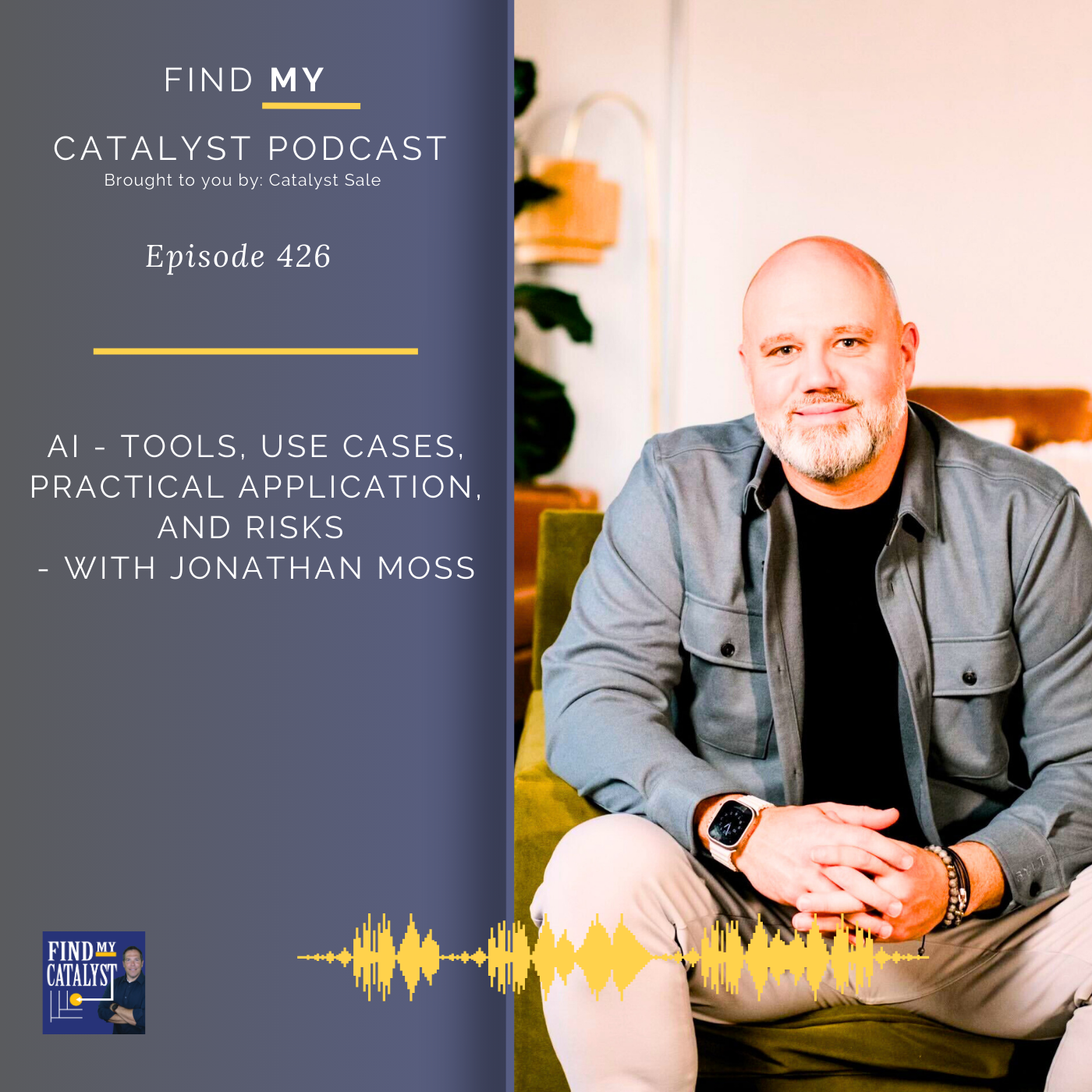
Episode 426 · Season 1
A.I. - Tools, Use Cases, Practical Application, and Risks with Jonathan Moss
About this episode
Jonathan Moss, a thought leader in AI and emerging technologies, dives into how AI can help streamline processes, empower individuals, and unlock creative potential. As a passionate advocate for leveraging AI as a "thought partner," Jonathan shares insights on practical use cases, the future of AI agents, and strategies for overcoming adoption hurdles.
Key Quotes from Jonathan Moss
- "AI is not going to replace your job, but someone who uses AI in the same job as you will replace you."
- "Think of AI as an intern; it needs clear instructions, context, and practice to deliver great results."
- "The tools we use today are enabling humans to do better human things—they simplify and empower."
In this episode, Jonathan Moss explains how AI tools can revolutionize workflows, from eliminating mundane tasks to supporting strategic decision-making. By viewing AI as an extension of human creativity, Jonathan emphasizes the importance of integrating these tools thoughtfully to achieve measurable outcomes while managing risks effectively.
Key Takeaways
1. AI as a Thought Partner
- AI excels at augmenting human creativity by handling repetitive tasks.
- It can brainstorm solutions and highlight blind spots in decision-making.
- A successful approach to AI requires learning and refining prompts.
2. Enhancing Efficiency Across Functions
- AI tools reduce time spent on non-strategic tasks like meeting preparation.
- Conversational intelligence platforms can automate coaching workflows.
- Documenting and optimizing processes with AI saves significant time and resources.
3. Exploring Practical AI Applications
- AI simplifies research for market analysis, strategic planning, and onboarding.
- Platforms like ChatGPT and Notebook LM enable dynamic learning and adaptation.
- Real-world use cases include creating recipes, designing workflows, and enhancing customer interactions.
4. Mitigating Risks in AI Adoption
- Ensure data security by leveraging private models or walled garden setups.
- Address workforce concerns by emphasizing AI as a tool for enhancement, not replacement.
- Regularly validate AI outputs to prevent inaccuracies or over-reliance.
5. Future Trends: Custom LLMs and AI Agents
- Smaller, customized large language models (LLMs) tailored to specific needs will dominate.
- AI agents can autonomously accomplish objectives, such as travel bookings or process automation.
- Tools like Relevance AI and Notebook LM offer glimpses of this future potential.
Actionable Challenge for Listeners
Start small with AI: use a tool like ChatGPT or Canva for a personal task, such as brainstorming ideas or creating visuals. Reflect on how the tool simplifies the process and builds confidence for professional applications.
More from Find My Catalyst Podcast
The Stanley Cup Playoffs are heating up, and Mike Simmons is joined by Jacquelyn Nicholson and Constantine Johns to break down every Round 2 matchup, react to the drama from Round 1, and make bold pre…
Ryan Milligan is the VP of Sales at QuotaPath, where he leads sales within a unified go-to-market organization alongside marketing and revenue operations. His career spans Wayfair, data science, perfo…
Matt Ferguson is a seasoned sales leader and coach with a global reach, having worked with clients in over seven countries. Known for his direct, story-driven teaching style, Matt focuses on sales fun…
Marcus Chan is the founder of Venli Consulting Group and a top sales coach known for transforming underperforming teams into high-performing machines. With a background that spans individual sales exc…
Jamie Vinck is a seasoned behavioral health executive, therapist, and author of The Rehab Playbook. With a background in corporate HR and a powerful personal journey through family, leadership, and lo…