
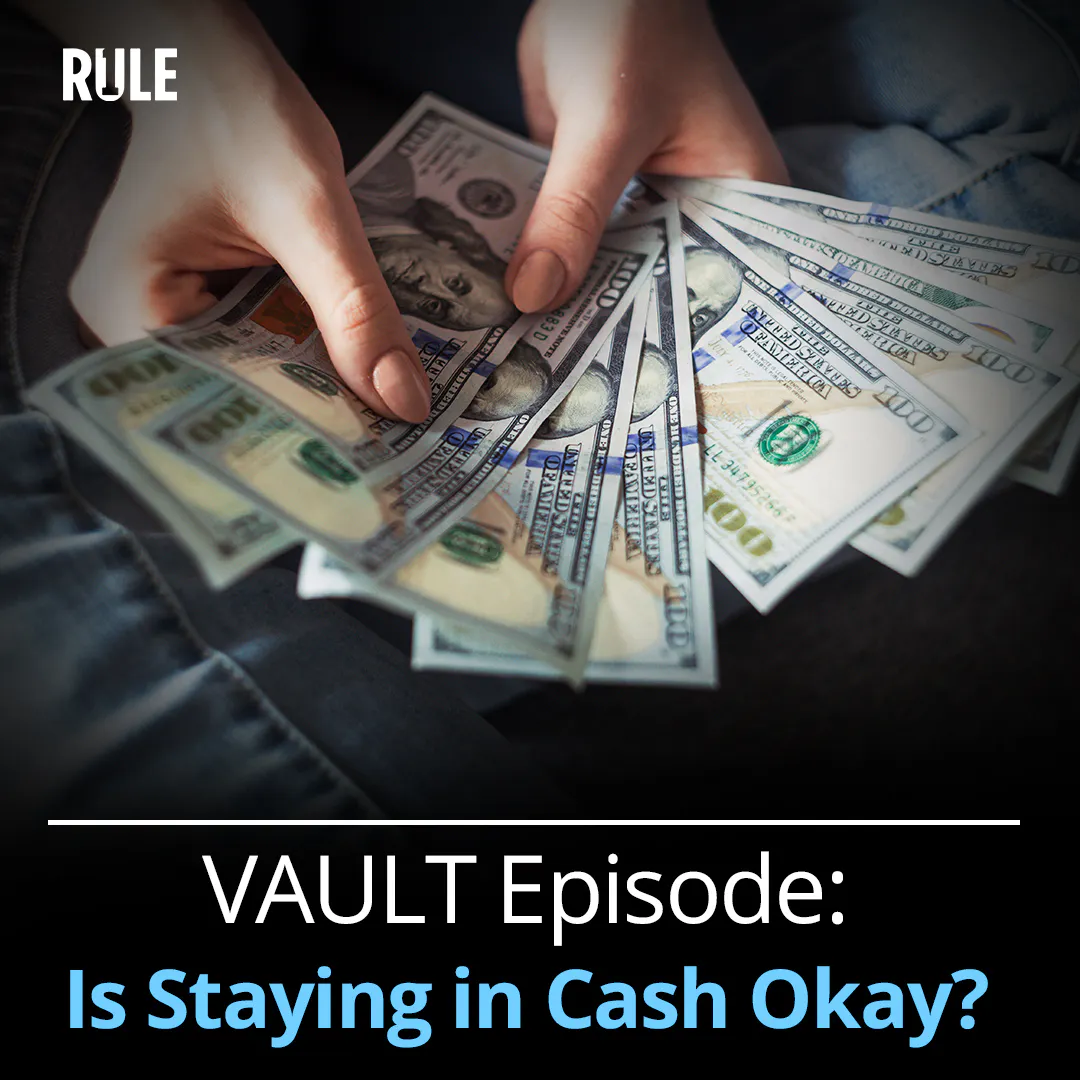
297- Quick Question: Is Cash Okay?
About this episode
When a company makes the decision to go public, shares of that company become available for purchase, allowing anyone to buy a stake in the company.
Each share is a stock, and investors are able to buy and sell shares in any public company at any time. Of course, as with any form of business, the goal is to buy a company’s stock when it’s “on sale” or undervalued relative to its actual value, and to sell that stock when it’s fully valued in order to make a profit.
A simplified look at a successful investment is one where an investor buys a company for a certain amount of dollars, holds on to the company for an extended period of time until its value has grown to the point that they feel comfortable selling it, and then sells it above what they purchased it for.
Buying great companies when they are on sale is what Rule #1 investing is all about, but it’s fine to wait to buy until you are sure you are getting both a wonderful business and a great price.
Think of it this way: you would never buy 100% of a company without thorough due diligence, and, likewise, you shouldn’t buy a small percentage of a company without the same.
When the experts—such as Warren Buffett or Charlie Munger—are publicly stating that they are sitting in cash, this is an indicator that they are waiting for a dip in the market, or an event to trigger their next large purchase.
On this vault episode of InvestED, Phil and Danielle answer a listener’s question regarding sitting on cash and managing your investments.
Learn how to invest and make decisions with confidence with the Rule #1 Cheat Sheet for Smarter Investing. Click here to download: http://bit.ly/2KthciL
Learn more about your ad choices. Visit megaphone.fm/adchoices
More from InvestED Podcast
In the high-stakes world of investing, mindfulness helps value investors stay focused, patient, and rational. It strengthens resistance to fear and greed, promotes long-term thinking, and sharpens dec…
Engaging in any form of investment involves some level of uncertainty. While it's natural to feel proud of our achievements, it's equally important to analyze our process when things go wrong. As with…
Free cash flow is a key metric in value investing. It provides a more reliable view of a company’s financial health than its earnings, which can be influenced by creative accounting. By focusing on fr…
Season’s greetings, value investors! Phil and Danielle check in to reflect on the holiday season and express gratitude for the support of all InvestED listeners throughout the year. As our hosts prepa…
So a business you own is undergoing an event that’s made the future less certain—so what’s your next move as a value investor? Finding the right time to sell can be difficult when the M.O. is to buy a…