
Episode 27 · Season 1
27 - The First Opiate Epidemic
About this episode
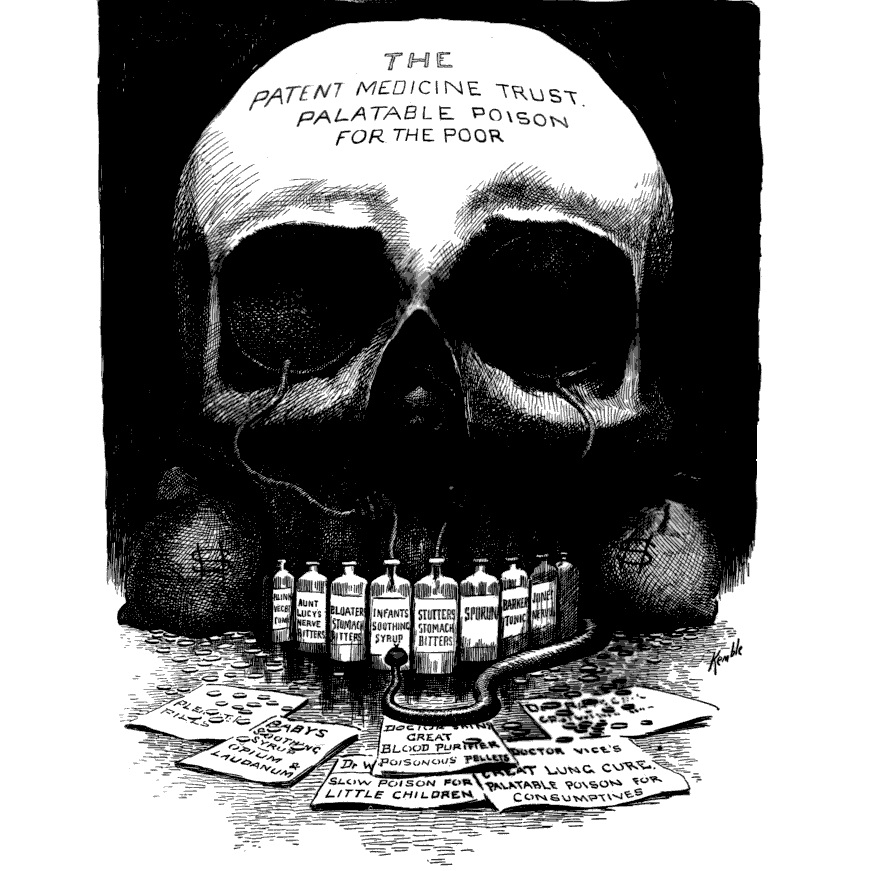
The United States is in the midst of an epidemic of addiction and overdose deaths due to opiate painkillers. Its causes are varied, but there's no question that physicians share a large part of the blame. Little discussed is that this is actually the second time this has happened. Almost a century ago, a remarkably similar epidemic struck the country. In this episode, called "The First Opiate Epidemic," I discuss what happened, the parallels to today, and the lessons we can learn from our forebearers. Learn about all this and a new #AdamAnswers in this month's Bedside Rounds, a tiny podcast about fascinating stories in clinical medicine!
Sources:
- Courtwright DT. Dark Paradise: A History of Opiate Addiction in America. Harvard University Press, 2001.
- Meldrum ML, "The ongoing opiod prescription epidemic: historical context," Am J Public Health. 2016 August; 106(8): 1365–1366.
- Courtwright DT, "Preventing and treating narcotic addiction -- a century of federal drug control," N Engl J Med 2015; 373:2095-2097.
- Adams JFA, "Substitutes for opium in chronic diseases," Boston Med Surg J 1889; 121:351-356.
- Macht DI, "The history of opium and some of its preparations and alkaloids," JAMA. 1915;LXIV(6):477-481.
- Hamilton GR and Baskett TF, "In the arms of Morpheus: the development of morphine for postoperative pain relief," Can J Anesth. 2000;47:4, 367-374.
- Weiner JP, "A shortage of physicians or a surplus of assumptions?" Health Aff January 2002 vol. 21 no. 1 160-162.
- Gudbranson BA et al, Reassessing the Data on Whether a Physician Shortage Exists. JAMA. 2017;317(19):1945-1946.
- Kirch DG and Petelle K, Addressing the Physician Shortage: The Peril of Ignoring Demography. JAMA. 2017;317(19):1947-1948.
More from Bedside Rounds
What does it mean when a computer can make better medical decisions than a human? The progress in large language models, and in particular the popularity of ChatGPT, has brought these questions to the…
What happens when a patient far from surgical care – say, at the bottom of the Pacific ocean on a submarine, or at a research base in Antarctica in the middle of the winter – develops a surgical abdom…
American doctors spend the majority of their time during the day on the computer, either writing or reading notes about their patients; only a small fraction is spent with the human beings in their ca…
In the past episode, cultural and medical historians Lakshmi Krishnan and Mike Neuss discussed the history of the actual work of the doctor – Holmesian detective, data entry clerk, or something else a…
What do doctors actually do? Are they Sherlockian detectives, hunting down obscure clues to solve intractable cases? Are they virtuosic experts, training for half a lifetime to bring the latest scienc…